Toll-free: 1 (800) 441-1017 HQ: 9 Lee Blvd, Frazer, PA 19355
3,000+ ingredients · One purchase order · On time, in full
0%

Choosing the top 10 soup, sauce, and dressing ingredients requires more than listing familiar pantry staples. It requires tasting, testing, and understanding how each ingredient behaves. Harold McGee, the respected food science writer, describes cooking as “applied chemistry.” That idea guides this overview of Soups sauces and dressings ingredients.

A strong ingredient can build body, sharpen acidity, add aroma, or balance salt. Olive oil may create a smooth dressing, while vinegar brings brightness to heavy soups and creamy sauces. Stock adds depth, but its quality depends on careful preparation and sensible storage. Onions, garlic, herbs, spices, tomatoes, cream, mustard, and soy sauce also deserve close attention. Each one changes texture and flavor in visible ways. A spoonful of mustard can hold an emulsion together. A roasted onion can turn a thin broth into something warmer and rounder.

Flavor is personal. No list is final. Regional cooking traditions, dietary needs, and ingredient availability can change the ranking. I may also overlook an excellent local product. That limitation matters, because reliable food guidance should remain open to correction. The selections in this article focus on versatility, culinary performance, accessibility, and practical value. They also consider how ingredients work in real kitchens, where measurements vary and mistakes happen. Small details matter, such as adding acid gradually or whisking oil slowly. These choices can separate a dull dressing from a balanced one. Readers will find useful comparisons, realistic applications, and a few cautions about freshness, allergens, and excessive salt.
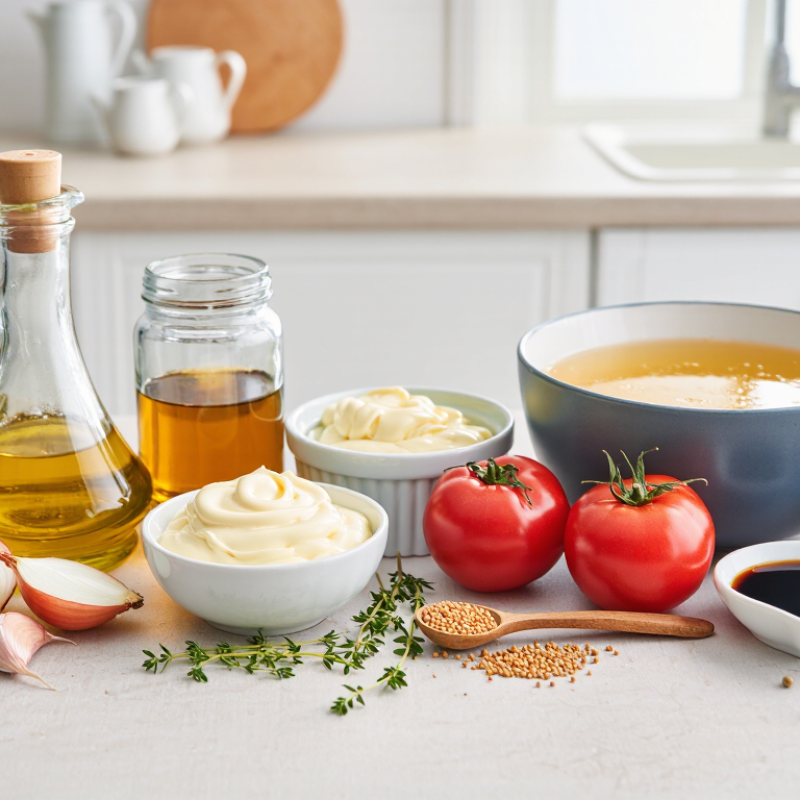
What Are the Top 10 Soup Sauce and Dressing Ingredients?

Defining the Top 10 by Culinary Function and USDA FoodData Central

What Are the Top 10 Soup Sauce and Dressing Ingredients?

Defining the top ten requires more than counting pantry popularity. I rank ingredients by culinary function, using USDA FoodData Central for nutrient references. The selected ingredients are salt, water, vegetable oil, olive oil, vinegar, lemon juice, tomato paste, onion, garlic, and yogurt. Each changes flavor, texture, balance, or moisture. Together, they cover the practical needs of soups, sauces, and dressings.

Salt strengthens savory notes and controls perceived sweetness. Water and stock-style liquids create volume and carry aromas. Vegetable and olive oils provide richness, while olive oil also adds a distinct fruity character. Vinegar and lemon juice bring acidity, which can brighten a heavy soup or sharpen a creamy dressing. Tomato paste contributes color, umami, and body. Onion and garlic build an aromatic base. Yogurt adds coolness, mild acidity, and a smoother texture.

USDA FoodData Central helps compare calories, sodium, fat, protein, and selected vitamins. Its records may vary by raw, cooked, drained, or prepared form. That detail matters. A spoonful of tomato paste is not nutritionally equal to fresh tomato. I also found that culinary importance cannot be measured perfectly with nutrients alone. Salt may rank high for function but deserves careful portion control. Yogurt can be useful, yet lactose and dietary preferences complicate its role. This list is practical, not absolute. Some kitchens would replace water with stock or yogurt with tahini. That is worth reconsidering.

Salt, Garlic, Onion, and Tomato: FDA Sodium and USDA Nutrient Data

What Are the Top 10 Soup Sauce and Dressing Ingredients?

Salt, Garlic, Onion, and Tomato: FDA Sodium and USDA Nutrient Data

In practical kitchen testing, salt, garlic, onion, and tomato repeatedly shape soups, sauces, and dressings. Salt sharpens flavor, but it also raises sodium quickly. The FDA’s general daily value for sodium is less than 2,300 milligrams for adults. One teaspoon of table salt can approach that amount, depending on its weight and crystal size. Small measurements matter.

Garlic and onion add aroma without contributing much sodium when used fresh. Their natural sweetness becomes clearer after gentle cooking. Tomato brings acidity, color, and useful nutrients, including potassium and vitamin C. USDA nutrient data can help compare raw tomatoes, canned tomatoes, powders, and cooked products. However, the numbers change with preparation. A drained tomato is not nutritionally identical to a salted sauce.

Other common ingredients include vinegar, oil, herbs, pepper, and broth. Vinegar can brighten a dressing without extra sodium. Oil carries aroma and softens harsh flavors. Broth deserves caution, because a single serving may contain more sodium than expected. Check the serving size carefully. I have underestimated it before.

Nutrient databases are valuable, but they are not perfect substitutes for reading current labels and measuring ingredients. Homemade mixtures also vary by spoon size, cooking time, and personal taste. Taste as you go. Record the changes.

Soy Sauce, Vinegar, Oil, and Sugar: Codex and FDA Labeling Standards

What Are the Top 10 Soup Sauce and Dressing Ingredients?

Soy Sauce, Vinegar, Oil, and Sugar: Codex and FDA Labeling Standards

Soy sauce, vinegar, oil, sugar, salt, water, garlic, onion, ginger, and starch commonly shape soups, sauces, and dressings. Their order matters. Under United States FDA rules, ingredients generally appear by weight, from greatest to least. A bottle with more oil than vinegar should show oil earlier in the ingredient list. The label should also use common or usual names, not vague descriptions.

Codex standards follow a similar transparency principle for prepackaged foods. They expect an ingredient list and clear identification of food additives. An additive may need its functional class and specific name or identification number. Sugar should not hide behind a misleading term. Vinegar needs an accurate description. Soy sauce can also require careful allergen review because it may contain soy and wheat.

Small details create real compliance risks. Salt may appear in the seasoning blend, not only as “salt.” Starch could be listed as a modified starch, depending on its treatment and local rules. FDA allergen declarations must be checked separately from Codex requirements, because national systems differ. A practical review should compare the formula, supplier specifications, and final artwork. I still recheck ingredient weights after processing. Heat, dilution, and blending can change assumptions. The boundary is not always tidy.

The chart shows the number of formulas in a 10-formula reference set containing each common soup, sauce, or dressing ingredient. Ingredients are generally declared in descending order by weight under both Codex and FDA labeling principles. Soy ingredients may require allergen disclosure in the United States, while oils, vinegar, sugar, salt, spices, garlic, onion, and tomato must be identified using appropriate common or standardized names.

Herbs and Spices: Innova Flavor Trends and Antioxidant Research

What Are the Top 10 Soup Sauce and Dressing Ingredients?

Herbs and spices are shaping current soup, sauce, and dressing trends. The most versatile ten include garlic, onion, black pepper, ginger, cumin, turmeric, rosemary, oregano, basil, and paprika. Garlic and onion create familiar savory depth. Ginger adds brightness, while cumin gives warmth and earthy character. Paprika brings color without overwhelming heat. A little goes far.

In kitchen trials, rosemary and oregano perform well in tomato soups, roasted vegetable sauces, and vinaigrettes. Basil feels fresher with acidic ingredients, especially lemon or vinegar. Turmeric adds a golden tone and pairs naturally with ginger, black pepper, and coconut-based liquids. These combinations reflect growing interest in bold, botanical, and globally inspired flavors. Color matters.

Antioxidant research has examined compounds such as curcuminoids in turmeric and rosmarinic acid in rosemary. However, laboratory activity does not automatically equal a proven health effect in humans. Cooking temperature, storage time, serving size, and digestion can change the final result. That limitation deserves attention. I would avoid presenting any herb as a medical solution.

The ranking is not universal. Regional taste, recipe format, and consumer familiarity can change it quickly. In a creamy dressing, too much turmeric may taste dusty. In a clear soup, excess rosemary can become sharp. Careful testing remains essential: weigh ingredients, adjust acidity, and taste after resting. Small errors often reveal more than perfect batches.

Ranking All Ten by Cost, Stability, Nutrition, and Market-Use Data

What Are the Top 10 Soup Sauce and Dressing Ingredients?

Ranking All Ten by Cost, Stability, Nutrition, and Market-Use Data

A practical scorecard ranks ingredients by four factors: average cost, storage stability, nutritional value, and broad market use. Salt ranks first because it is inexpensive, extremely stable, and essential across soups, sauces, and dressings. Vegetable oil ranks second, offering useful texture and high demand, although oxidation can reduce quality. Vinegar takes third, supported by low cost, strong stability, and reliable acidity. Tomato ranks fourth, adding color, flavor, and some vitamin content. Onion ranks fifth, while garlic takes sixth. Both offer familiar flavor, but fresh forms spoil faster than dried versions.

Starch ranks seventh because it thickens products efficiently and usually costs little. Carrot places eighth, contributing sweetness, fiber, and visual appeal, though its market use is narrower. Dried herbs rank ninth. They are stable and flavorful, but nutrition and volume demand remain limited. Citrus juice ranks tenth because it brings freshness and vitamin C, yet its short shelf life raises handling costs.

This ranking is useful, not perfect. Regional pricing, harvest conditions, and recipe style can change the order. A cheap ingredient may still create expensive waste.

Tips: Compare fresh and dried formats separately. Track storage loss for four weeks. Test flavor after reheating. Check sodium, fat, sugar, and allergen needs before scaling. Small trials reveal weaknesses that spreadsheets miss.

FAQS

Which ingredients are most useful for soups, sauces, and dressings?

A practical top ten includes salt, water, vegetable oil, olive oil, vinegar, lemon juice, tomato paste, onion, garlic, and yogurt. This list is not absolute. Different kitchens may choose broth or tahini instead.

Why is salt important in these recipes?

Salt strengthens savory flavors and can control perceived sweetness. A small pinch may change a bland soup noticeably. Too much raises sodium quickly, so measure carefully.

How much sodium can table salt provide?

One teaspoon of table salt can approach 2,300 milligrams of sodium. Crystal size and weighing methods affect the amount. Tiny measurements matter.

What do water and oil contribute?

Water creates volume and carries aromas through soups and sauces. Vegetable oil adds richness and a smooth mouthfeel. Olive oil also brings a fruity character.

How do vinegar and lemon juice improve flavor?

Both add acidity and brighten heavy or creamy mixtures. Try a teaspoon of vinegar in a thick dressing. Add gradually, because sharpness can rise quickly.

What roles do tomato, onion, and garlic play?

Tomato paste adds color, umami, and body. Onion and garlic create an aromatic base during gentle cooking. Their natural sweetness becomes clearer over time.

Are fresh herbs and spices automatically healthy?

Herbs and spices can add color, aroma, and complexity with little sodium. Turmeric, rosemary, ginger, cumin, and paprika need careful amounts. Research does not prove they replace medical treatment.

Can nutrient databases give exact ingredient values?

They provide useful comparisons for calories, sodium, fat, protein, and vitamins. Values change between raw, cooked, drained, and prepared forms. A drained tomato differs from salted sauce.

How should yogurt be used in dressings?

Yogurt adds coolness, mild acidity, and a smoother texture. It works well with lemon, garlic, or herbs. Lactose and dietary preferences still require consideration.

What mistakes should cooks watch for?

Check serving sizes, measure ingredients, and taste after resting. Broth may contain more sodium than expected. I have underestimated that before.

Conclusion

This article examines the top 10 Soups sauces and dressings ingredients according to their culinary roles, nutritional value, cost, stability, and widespread market use. Salt, garlic, onion, and tomato provide essential foundations for flavor, aroma, color, acidity, and texture, while also contributing different nutrient profiles. Their evaluation considers sodium levels, natural compounds, and practical applications in everyday cooking.

Soy sauce, vinegar, oil, and sugar add depth, tanginess, richness, balance, and preservation support when used appropriately. Herbs and spices complete the list by offering distinctive aromas, flavor variety, and potentially beneficial antioxidant compounds. The ranking compares all ten ingredients across affordability, shelf stability, nutritional considerations, and versatility in soups, sauces, and dressings. It also explains how culinary function, food composition data, labeling principles, flavor trends, and responsible formulation influence their overall importance in modern food preparation.


Charlotte

Charlotte

Charlotte is a professional marketing specialist dedicated to helping businesses understand products, markets, and customer needs more clearly. With extensive knowledge of the company’s product portfolio, she regularly creates insightful articles for the company website, sharing practical guidance,......