Meat and poultry processing ingredients help turn fresh cuts into products that are consistent, practical, and appealing. Their roles vary: salt can season and support moisture retention, while starches may improve binding in sausages or formed products. Some ingredients slow oxidation, helping limit changes in flavor and color during storage. Others support texture, from a firm deli slice to a juicy chicken patty.
Small amounts can make a visible difference. A well-mixed sausage holds together when sliced; an uneven blend may crumble or feel overly salty. But ingredients do not replace sound handling, accurate processing, or careful temperature control. They work as part of a larger system. That distinction matters.
This guide explores why processors use these ingredients, how common categories function, and what can affect their performance. It also considers product quality, consumer expectations, and clear labeling. Ingredient choices depend on the recipe, equipment, and intended use, so one solution rarely fits every product. Requirements also vary by market, and manufacturers should verify current rules and technical guidance before changing a formulation. The picture is not always simple. Some functions overlap, and a useful ingredient may bring trade-offs in taste, texture, or cost. Understanding those details helps readers assess claims without assuming that every additive is necessary—or that every unfamiliar name signals a problem.
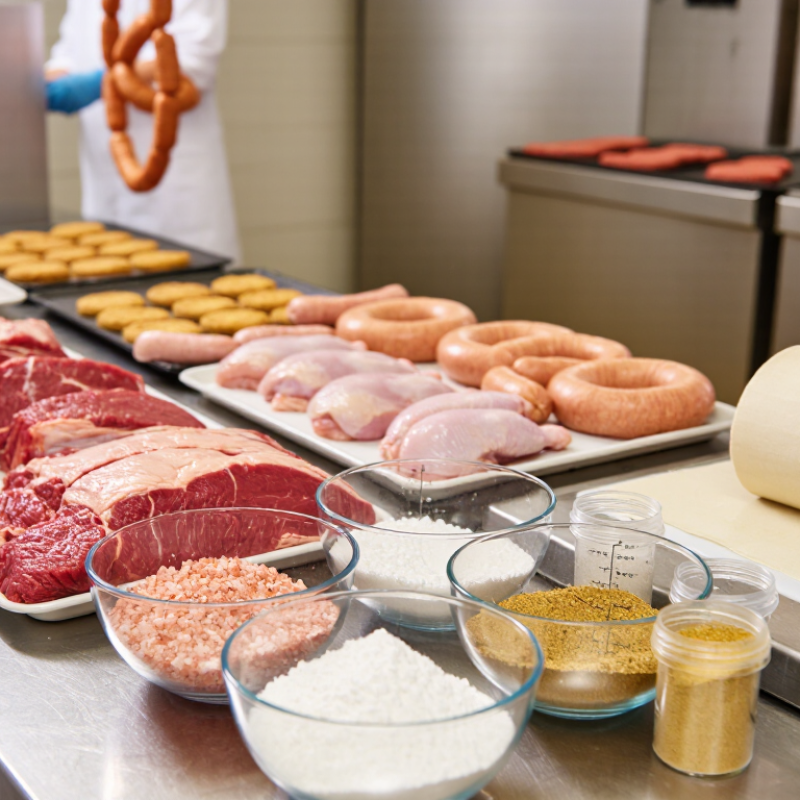
Meat and poultry processing ingredients are substances added during preparation, curing, cooking, or packaging. They help control flavor, texture, moisture, color, and product stability. Common examples include salt, sugars, spices, phosphates, antioxidants, binders, and approved curing agents. Some ingredients work visibly, such as spices on a sausage surface. Others work quietly inside the product.
Salt can improve flavor while helping manage water activity. Phosphates may support moisture retention and a more consistent bite. Antioxidants can slow unwanted flavor changes caused by oxidation. Binders and starches help hold sliced products together. In certain products, carefully controlled cultures support fermentation and create distinctive acidity.
The boundaries are not always neat. An ingredient may serve several functions at once. Water, for example, can dissolve salts, distribute seasonings, and affect tenderness. Processing teams must measure ingredients accurately and control temperature, time, and mixing speed. Small changes can produce a noticeably different slice.
Safety and labeling remain essential. Ingredients must be suitable for their intended use and handled under approved processing procedures. Curing agents require precise control, not guesswork. Labels should identify ingredients and relevant allergens according to applicable requirements. A formulation may look simple on paper, yet its real performance depends on equipment, raw materials, and operator control. Even experienced processors review results, because texture or color can shift from one production run to another.
They are substances added during preparation, curing, cooking, or packaging. They influence flavor, texture, moisture, color, and stability. Some act visibly. Others work quietly inside the product.
Common examples include salt, sugars, spices, phosphates, antioxidants, binders, starches, and approved curing agents. Carefully controlled cultures may support fermentation. The exact choice depends on the product.
Salt adds flavor and helps manage water activity. It can also influence texture and product stability. Too little may weaken the intended result. Too much can overpower the bite.
Phosphates may improve moisture retention and create a more consistent bite. Binders and starches help sliced products stay together. A slice should hold its shape, not crumble immediately.
No. One ingredient can perform several roles. Water may dissolve salts, distribute seasonings, and affect tenderness. The boundaries are not always neat.
Processors consider safety, function, dosage, processing conditions, and labeling impact. They check whether an ingredient suits the specific product and process. Success in one recipe proves little.
Curing agents require controlled amounts and approved procedures. Guesswork is unsuitable. Teams should verify the recipe, weighing method, and batch records before processing.
Staff monitor temperature, time, mixing speed, and ingredient quantities. A small change can alter color or slice texture. Equipment and raw materials also affect performance.
Records should identify suppliers, lots, quantities, recipes, and production batches. Labels should list ingredients and relevant allergens under applicable requirements. A quick lot check can reveal mistakes.
Not always. Texture and color may shift between production runs. Rushed changeovers can leave record gaps. Regular review remains necessary, even when the formulation looks simple.
Meat and poultry processing ingredients are used to help create products with consistent quality, appealing sensory qualities, and dependable shelf life. Depending on the product and processing method, ingredients may support a desired texture, balance or enhance flavor, and contribute to an attractive appearance. They can also help retain moisture or maintain product structure, making the finished food more uniform from batch to batch.
These ingredients may contribute to preservation and food safety by helping control conditions that affect product stability, alongside appropriate handling and processing practices. Different methods, such as curing, cooking, or forming, call for different ingredient combinations because each places distinct demands on the product. Ingredient choices are guided by the intended food, its processing requirements, and applicable safety and labeling standards. Careful selection helps ensure that ingredients serve a clear purpose while supporting a consistent, safe, and enjoyable product.