Explore our consolidated ingredient matrix designed for high-capacity food processors, bakery manufacturers, and industrial beverage formulators.
L-Ascorbic Acid (CAS No. 50-81-7, E-Number E300) is a critical water-soluble antioxidant, sequestering agent, and redox stabilizer widely utilized across the food, beverage, meat processing, and nutraceutical industries. As global food standards evolve toward cleaner labels and rigorous safety verification, securing a certified supply chain backed by CE Conformity, USP/FCC/EP monographs, and ISO 22000/FSSC 22000 audit trails becomes essential for procurement directors and principal food technologists.
Our industrial production facilities utilize advanced two-stage microbial fermentation processes (converting D-glucose to 2-keto-L-gulonic acid, followed by acidic cyclization), yielding crystalline Ascorbic Acid powder of exceptional purity, high optical rotation, and minimal heavy metal contamination.
Information Gain Insight: Unlike standard grade Vitamin C, CE Certified Ascorbic Acid undergoes stringent batch-level validation for EU Directive compliance, verifying residual solvent limits (< 50 ppm ethanol), ultra-low heavy metal concentrations (Lead ≤ 2 ppm, Arsenic ≤ 1 ppm, Mercury ≤ 0.1 ppm), and strict particle-size uniformity to prevent dusting and segregation during large-scale automated dry blending.
| Parameter | Specification Benchmark | Testing Method Standard |
|---|---|---|
| Chemical Formula / CAS | C6H8O6 / 50-81-7 | EINECS: 200-066-2 |
| Assay (Purity) | 99.0% – 100.5% (Dry Basis) | USP / Ph. Eur. Titration Method |
| Specific Optical Rotation | +20.5° to +21.5° | Polarimetry (10% w/v aqueous solution) |
| Appearance & Color | White to slightly yellowish crystalline powder | Visual / Spectrophotometric color index |
| Particle Size Options | 30-40 Mesh (Granular), 80-100 Mesh (Fine Powder), 100-200 Mesh (Micronized) | Laser Diffraction / Sieve Analysis |
| pH (5% w/v Solution) | 2.1 – 2.6 | Potentiometric glass electrode |
| Heavy Metals (as Pb) | ≤ 10 ppm (Strict European Standard: ≤ 2 ppm) | ICP-MS (Inductively Coupled Plasma) |
| Loss on Drying | ≤ 0.4% | Thermogravimetric drying at 105°C |
Navigating global ingredient procurement requires more than just low unit pricing; it demands supply chain transparency, technical application assistance, and order consolidation capabilities that reduce overhead. Integrated with Essex Food Ingredients nationwide logistics infrastructure, our enterprise model solves complex procurement friction points for companies of all sizes.
Every shipment is accompanied by batch-specific Certificates of Analysis (COA), Non-GMO statements, Allergen-free declarations, and Kosher/Halal certifications to streamline regulatory audits.
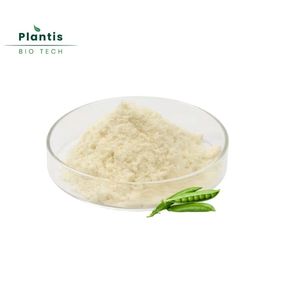
Combine Ascorbic Acid with Modified Starches, Hydrocolloids (Guar/Xanthan), Pea Proteins, and Food Grade Phosphates into a single purchase order to lower freight costs and simplify accounts payable.
Protect working capital by avoiding excessive plant inventory. Utilizing localized distribution centers across North America and Europe, we deliver exact quantities on-time and in-full.
Ascorbic acid operates as a multi-functional enzyme inhibitor, oxygen scavenger, and dough conditioner. Understanding its specific redox mechanism in different food matrices enables formulation teams to optimize dosage and extend shelf stability without compromising sensory properties.
Functions as a fast-acting dough improver. Through enzymatic oxidation by ascorbic acid oxidase, it converts to dehydroascorbic acid, which oxidizes sulfhydryl (-SH) groups in gluten proteins into disulfide (-S-S-) bonds, enhancing dough elasticity, gas retention, and loaf volume.
Accelerates the conversion of nitrite to nitric oxide, forming nitrosomyoglobin for stable pink color fixation in cured meats. Additionally, its potent antioxidant activity prevents lipid oxidation and rancidity in emulsion sausages and ground protein matrixes.
Acts as a primary oxygen scavenger to inhibit enzymatic browning catalyzed by polyphenol oxidase (PPO). Preserves natural color, protects heat-sensitive flavor compounds, and fortifies final RTD products with essential Vitamin C.
The global food ingredient procurement landscape is experiencing structural shifts driven by geopolitical realignments, carbon accounting metrics, and clean-label consumer demand. Procurement executives must adapt to these four key trends shaping the 2025–2030 market horizon:
Traditional multi-step synthetic pathways are rapidly being replaced by eco-efficient two-step fermentation technologies using genetically optimized strain combinations (e.g., Ketogulonicigenium vulgare). This green manufacturing approach reduces steam consumption by 32%, minimizes hazardous acid waste, and fulfills corporate ESG mandate requirements while producing ultra-pure L-Ascorbic Acid suitable for CE marking.
Single-region sourcing risks have forced multinational food processors to shift from "Just-In-Time" (JIT) to "Just-In-Case" (JIC) procurement strategies. Regional distributors with multi-warehouse networks—capable of buffering 60 to 90 days of critical ingredients like Ascorbic Acid, Monosodium Phosphate, and Guar Gum—are becoming indispensable strategic partners.
With European Scope 3 carbon reporting mandates taking effect, food brands require ingredient suppliers to provide Product Carbon Footprint data per metric ton. Factory partners utilizing renewable energy microgrids and bio-based fermentation feedstocks hold a clear competitive advantage in enterprise tenders.
To maximize antioxidant efficiency and withstand high-shear or high-temperature processing conditions, recent R&D developments have expanded the functional capabilities of standard Ascorbic Acid powder:
Coating fine ascorbic acid particles with hydrogenated vegetable oils or ethyl cellulose matrices prevents premature degradation during extrusion, baking, or high-humidity storage. Controlled release ensures antioxidant activity triggers exactly when activated by thermal or moisture thresholds.
Formulating Ascorbic Acid in combination with Tocopherols (Vitamin E), Rosemary Extract, and Citric Acid creates a multi-phase antioxidant shield. Ascorbic acid regenerates oxidized alpha-tocopherol radicals at the lipid-water interface, exponentially expanding shelf-life efficiency in complex emulsion foods.
Detailed answers for purchasing directors, quality assurance managers, and product development engineers.
CE Certification verifies that our Ascorbic Acid manufacturing process meets European health, safety, and environmental protection standards under EU Regulation (EC) No 1333/2008 and EU No 231/2012 for food additives. It guarantees rigorous batch purity, verified heavy metal thresholds, and full compliance for international export into strict regulatory markets.
Coarse Granular (30-40 mesh) features superior flowability and minimal dust, making it ideal for high-speed tableting and capsule filling. Fine Powder (80-100 mesh) is the standard industry choice for rapid dissolution in beverage batching and brine injections. Micronized Powder (100-200 mesh) provides maximum surface area for dry baking premixes and fat-continuous spreads.
Standard industrial packaging consists of 25kg net cardboard cartons or fiber drums with double high-density polyethylene (HDPE) moisture-barrier inner liners. When stored in unopened original packaging under cool (<25°C), dry, and dark conditions, the certified shelf life is 24 to 36 months from the manufacturing date.
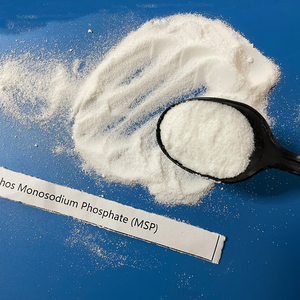
Yes. Through our order consolidation program, buyers can group Ascorbic Acid with complementary ingredients such as Pea Protein Isolate, Monosodium Phosphate, Modified Starch, and Natural Colorants into one consolidated shipment, significantly lowering landed freight costs and administrative overhead.
Each lot comes standard with a comprehensive documentation dossier including the Certificate of Analysis (COA), Batch Production Record reference, Safety Data Sheet (SDS), Allergen Statement, GMO-Free Declaration, BSE/TSE-Free Statement, and Kosher/Halal Certificates.
Partner with an established supply chain leader. Contact our technical sales and sourcing experts to request factory samples, custom pricing quotes, or technical specification dossiers.
Contact Us