Consolidated sourcing solutions engineered for strict compliance, high functionality, and scale efficiency.
Bridging Chinese chemical manufacturing capacity with global regulatory standards and localized delivery networks.
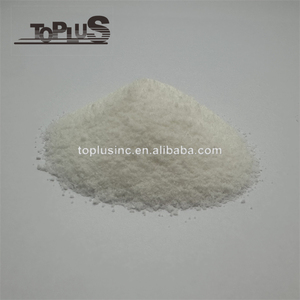
Sodium Acid Pyrophosphate (SAPP), chemically defined as Disodium Dihydrogen Pyrophosphate ($Na_2H_2P_2O_7$, CAS No. 7758-16-9, INS 450i), represents a critical inorganic chemical additive used across the global food processing, industrial baking, seafood preservation, and starch modification sectors. As food manufacturers encounter tightening margins, regulatory scrutiny regarding heavy metals (Arsenic, Lead, Cadmium), and escalating demands for precise Gas Release Rates (ROR), partnering with verified China manufacturers becomes a strategic imperative.
Our integrated procurement architecture eliminates the traditional friction points of cross-border chemical procurement. By uniting strict quality assurance (ISO22000, HACCP, HALAL, KOSHER, FSSC22000 certified manufacturing plants) with flexible single-purchase-order consolidation, we empower R&D formulators and enterprise procurement managers to secure stable, high-purity SAPP supplies with total supply chain transparency.
Core Procurement Advantage: We manage multi-vendor sourcing streams into unified ocean and domestic shipments, dramatically lowering minimum order quantities (MOQs), reducing customs friction, and guaranteeing batch-to-batch Rate of Reaction (ROR) stability.
SAPP acts as a versatile leavening acid, buffering agent, chelating agent, and protein modifier. Its functional efficacy is governed primarily by its Rate of Reaction (ROR)—the percentage of carbon dioxide released from sodium bicarbonate within 2 minutes at 27°C in a standardized dough matrix.
| Chemical Property / Parameter | Standard Food Grade (FCC / E450i) | High-Purity Specialty Grade |
|---|---|---|
| Chemical Formula | $Na_2H_2P_2O_7$ | $Na_2H_2P_2O_7$ |
| Assay ($Na_2H_2P_2O_7$) | ≥ 95.0 % | ≥ 98.0 % |
| $P_2O_5$ Content | 63.0 % – 64.5 % | 63.5 % – 64.2 % |
| pH (1% Aqueous Solution) | 3.8 – 4.4 | 3.9 – 4.3 |
| Loss on Drying (105°C) | ≤ 0.5 % | ≤ 0.3 % |
| Heavy Metals (as Pb) | ≤ 10 ppm | ≤ 1 ppm (Ultra-Pure) |
| Arsenic (As) | ≤ 3 ppm | ≤ 1 ppm |
| Fluoride (F) | ≤ 50 ppm | ≤ 10 ppm |
| Water Insolubles | ≤ 1.0 % | ≤ 0.2 % |
Selecting the optimal ROR variant prevents critical processing defects such as premature leavening loss in canned doughs, uneven crumb cell structures, or off-taste profile development (often referred to as 'pyro-taste'). China's top-tier manufacturers synthesize SAPP in controlled thermal condensation units, allowing precise tuning of the crystal structure to deliver distinct ROR profiles:
Ideal for refrigerated canned biscuits, frozen pre-cut doughs, and long-bench-time bakery operations where gas generation must be delayed until thermal exposure in the oven.
The industry standard for retail baking powders, cake mixes, prepared pancake batters, and industrial cookie production balancing bench-time stability with oven spring.
Formulated for cake doughnuts, rapid-rise commercial bread systems, and applications requiring immediate gas expansion during low-residence mixing cycles.
In chemical leavening, SAPP functions as a slow-release acidifier reacting with sodium bicarbonate. It controls dough rheology, adjusts pH to optimize gluten networking, and interacts with flour proteins to deliver consistent volume, crumb density, and crust browning. By preventing premature $CO_2$ loss during mixing and holding phases, commercial bakeries achieve uniform weight and geometry across automated lines.
SAPP is vital in French fry and reconstituted potato processing. It acts as a powerful sequestrant that chelates divalent iron ions ($Fe^{2+}$), preventing the formation of dark iron-diphenol complexes responsible for After-Cooking Darkening (ACD). Furthermore, dipping cut potatoes in SAPP solution mitigates acrylamide formation during high-temperature frying, supporting clean-label health standards.
In sausage emulsions, poultry brines, and canned seafood (e.g., tuna, shrimp), SAPP increases ionic strength and elevates pH away from the isoelectric point of muscle proteins. This enhances water-holding capacity (WHC), minimizes cook-loss and drip-loss, prevents struvite crystal precipitation in canned fish, and maintains juiciness without creating undesirable textural softness.
In chemical starch processing, SAPP acts as a phosphorylation reagent to yield cross-linked starches featuring high viscosity stability under shear, acid, and heat processing. Beyond food, high-purity SAPP finds application in leather tanning, liquid detergent building, electronic-grade surface treating, and oilfield drilling mud dispersion.
The global food phosphate market is undergoing structural shifts driven by regulatory evolution, sustainability metrics, and supply chain re-alignment.
China's leading manufacturers are transitioning from conventional yellow phosphorus production to green thermal processing and purified wet-process phosphoric acid (PPA) routes. This shift reduces carbon intensity per metric ton by up to 35% while dramatically decreasing trace heavy metal impurities, satisfying stringent EU and FDA environmental footprint standards.
With global health authorities pushing for lower daily sodium intake, R&D teams are formulating hybrid leavening systems that replace portioned SAPP with Monopotassium Phosphate and Potassium Acid Pyrophosphate (KAPP). Leading Chinese suppliers are engineering co-crystallized Low-Sodium SAPP formulations that maintain traditional ROR speeds without imparting metallic bitterness.
Industrial food processors are phasing out standard ground powders in favor of non-dusting micro-granular SAPP (100–200 mesh uniform distribution). Granulated grades increase flowability in automated dosing hoppers, prevent worker inhalation hazards, and speed up dissolution rates in cold brines.
Procurement strategies have migrated from 'Just-In-Time' to 'Just-In-Case' dual-hub sourcing models. Corporate buyers leverage consolidated freight forwarders that maintain buffer inventory across regional US/EU distribution centers, shielding operations from raw phosphate rock price swings and maritime routing bottlenecks.
Standard factory-direct shipments typically require full container loads (FCL), approx. 20 to 25 Metric Tons in 25kg multi-wall paper bags or 1000kg super sacks. However, through our consolidated warehouse distribution model, buyers can purchase mixed pallets or smaller LCL quantities combined with starches, hydrocolloids, and preservatives under one purchase order.
Every production lot undergoes rigorous gas-ometric titrations in certified laboratory test kitchens. Certificate of Analysis (COA) documentation verifies that the Rate of Reaction stays strictly within specified margins (± 2 ROR units). Samples are retained for 24 months for traceability.
All recommended primary manufacturers hold current GFSI-recognized certifications, including FSSC 22000, ISO 22000, and HACCP. Products conform fully to United States Pharmacopeia (USP), Food Chemicals Codex (FCC), and European Regulation (EU) No 231/2012 specifications, verified by third-party testing (SGS, Eurofins).
Monocalcium Phosphate (MCP) is a fast-acting acid that reacts rapidly upon initial wetting, providing early bench gas but limited oven spring. Glucono-Delta-Lactone (GDL) provides slow heat-activated acidity but is significantly more expensive. SAPP provides the broadest spectrum of customizable ROR speeds (15 to 40) at a superior cost-in-use ratio, making it the preferred choice for industrial baking.
When stored in original sealed poly-lined multi-wall paper bags in a cool, dry, well-ventilated warehouse environment away from direct moisture, SAPP maintains chemical stability for 24 months from the manufacturing date. caking can be avoided by maintaining relative humidity below 65%.