Direct supply chain integration offering combined shipment capabilities, lower MOQs, and stringent quality control protocols.
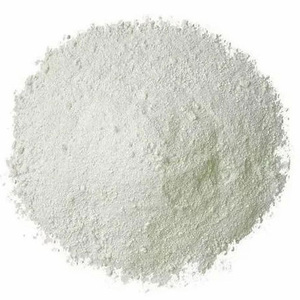
In modern commercial food processing, pharmaceutical formulation, and personal care manufacturing, Potassium Sorbate Granular (CAS: 24634-61-5, E202) stands out as the globally recognized gold standard for antimicrobial preservation. Derived as the potassium salt of sorbic acid, it possesses exceptional solubility and antimicrobial efficacy against yeasts, molds, and select bacteria without altering taste, odor, or color profiles.
China has consolidated its position as the undisputed center of global sorbate manufacturing, accounting for over 70% of the worldwide supply. For international procurement directors, supply chain executives, and chief R&D officers, identifying top-tier Chinese manufacturers is no longer just about obtaining the lowest unit cost. It requires a nuanced understanding of synthesis technology, granular physical morphology, regulatory compliance (FCC IV, E202, USP, Kosher, Halal, ISO 22000), and vendor ESG parameters.
This whitepaper offers an exhaustive analysis of China’s leading potassium sorbate granular factories, comparing granular vs. powder physical dynamics, dissecting local supply clusters in Shandong and Jiangsu, outlining future procurement trends through 2030, and demonstrating how consolidated supply strategies lower total cost of ownership (TCO).
| Parameter / Test Item | FCC IV Specification | USP / EP Standard | Top-Tier China Factory Standard |
|---|---|---|---|
| Assay Concentration (Dry Basis) | 99.0% - 101.0% | 99.0% - 101.0% | 99.5% - 100.5% (Strict Batch Control) |
| Physical Appearance | White to Off-White Granules | White Granules / Extruded Granular | Uniform Dust-Free Spherical/Spheronized Granules |
| Loss on Drying (105°C, 3h) | ≤ 1.0% | ≤ 1.0% | ≤ 0.5% (Enhanced Shelf Stability) |
| Alkalinity (as K2CO3) | ≤ 1.0% | ≤ 1.0% | ≤ 0.6% |
| Acidity (as Sorbic Acid) | ≤ 1.0% | ≤ 1.0% | ≤ 0.4% |
| Heavy Metals (as Pb) | ≤ 10 mg/kg | ≤ 10 mg/kg | ≤ 2 mg/kg (Ultra-Pure Grade) |
| Arsenic (As) | ≤ 3 mg/kg | ≤ 3 mg/kg | ≤ 1 mg/kg |
| Lead (Pb) | ≤ 2 mg/kg | ≤ 2 mg/kg | ≤ 1 mg/kg |
| Bulk Density | Not Specified | Not Specified | 0.68 g/cm³ - 0.74 g/cm³ (High Storage Efficiency) |
The transition from fine powder potassium sorbate to extruded or spherical granular forms has delivered substantial operational savings across automated processing lines.
Potassium sorbate powder causes significant respiratory irritation and eye discomfort for plant personnel. Granular formats feature an anti-caking mesh structure that eliminates particulate airborne drift during hopper loading and batch mixing, supporting strict OSHA / EU EHS workplace safety compliance.
Contrary to legacy assumptions, high-grade extruded granular sorbate possesses engineered porosity. It dissolves faster than compact powder agglomerates in liquid phases (up to 58.2g/100ml at 20°C), eliminating un-dissolved clumps at the bottom of beverage tanks or brine solution vessels.
Automated dosing systems require predictable gravimetric flow. Granular sorbate offers uniform particle size distribution (20–80 mesh), preventing bridge formation and clogging in pneumatic lines, automated weighers, and continuous high-speed bakery dough mixers.
Understanding the geographic concentration of Chinese chemical synthesis is critical for evaluating risk mitigation, freight logistics, and raw material access. Chinese production of potassium sorbate is primarily centered in Shandong Province and Jiangsu Province, with emerging secondary hubs in Henan and Anhui.
Shandong houses the world's largest fully integrated synthetic sorbate plants. Factories in this region leverage direct backward integration into acetic acid and crotonaldehyde synthesis.
Jiangsu-based producers specialize in high-purity, low-heavy-metal variants catering to ultra-strict European and North American pharmaceutical and infant nutrition buyers.
The industrial production of Potassium Sorbate Granular follows a precise two-stage synthesis:
Optimizing dosage parameters based on pKa values, moisture levels, and formulation matrices.
Potassium sorbate itself is the salt form; once added to aqueous solutions, it dissociates into potassium ions ($K^+$) and un-dissociated sorbic acid ($CH_3-CH=CH-CH=CH-COOH$). The un-dissociated sorbic acid molecule is the active antimicrobial agent capable of penetrating the lipophilic cell membranes of microorganisms.
The pKa of sorbic acid is 4.76. Antimicrobial activity is strictly dependent on the final pH of the finished product:
When implementing Potassium Sorbate Granular across high-volume production, dosages must be tailored to regulatory limits and microbiological challenges:
| Industry Sector | Target Microorganisms | Typical Dosage Range | Formulation Synergies & Process Notes |
|---|---|---|---|
| Industrial Bakery (Cakes, Tortillas, Bread) | Aspergillus niger, Penicillium, Rope Bacteria | 0.10% - 0.25% (w/w based on flour) | Use granular format to prevent yeast inhibition during early fermentation; combine with Calcium Propionate in yeast-leavened bread. |
| Beverages & Juices (Carbonated & Still) | Saccharomyces cerevisiae, Zygosaccharomyces | 0.02% - 0.05% (w/v) | Often paired with Sodium Benzoate or Dimethyl Dicarbonate (DMDC). Ensures rapid dissolution without particulate hazing. |
| Cheese & Dairy Products (Processed Cheese, Yogurt) | Surface Molds, Spoilage Yeasts | 0.05% - 0.20% (w/w) | Surface spraying or direct blending into melted cheese matrix. Maintains microbial safety without off-taste development. |
| Wine & Cider Stabilization | Wild Yeasts, Secondary Fermentation | 0.015% - 0.03% (w/v) | Added prior to bottling alongside Sulfur Dioxide ($SO_2$) to prevent re-fermentation of residual sugars. |
| Personal Care & Cosmetics (Creams, Lotions) | Gram-negative molds, yeast, skin microflora | 0.10% - 0.30% (w/w) | Clean-label substitute for parabens. Effective in acidic skin-care formulations (pH 4.5 – 5.5). |
How consolidated distribution bridges Chinese direct-factory manufacturing with local North American and international production facilities.
Managing individual overseas factory relationships across dozens of ingredients generates immense administrative burden. Essex Food Ingredients acts as a single point of contact—combining Potassium Sorbate Granular with over 3,000 functional ingredients (starches, hydrocolloids, enzymes, phosphates, dried garlic, and protein powders) into one unified purchase order.
Direct factory sourcing from China often mandates multi-ton full container loads (FCL), tying up working capital and warehouse space. By stocking inventory across localized distribution centers (including key hubs in Frazer, PA, Sayreville, NJ, and enterprise partner warehouses across the USA), buyers access lower minimum order quantities (MOQs) with on-time, in-full delivery.
As global regulatory standards evolve and food manufacturers navigate shift towards clean labels and supply security, procurement directors must prepare for several structural market shifts:
Chinese manufacturers are transitioning from traditional cylindrical extruded granules (1-3mm rods) to ultra-uniform Spheronized Micro-Granules. This micro-spherical shape optimizes bulk density by 8%, improves high-speed automatic bagging, and reduces transport friction breakage that generates fine dust inside 25kg cartons.
Revisions to European Commission regulations (E202 purity criteria) mandate tighter heavy metal limits (lead < 2 ppm, mercury < 1 ppm, arsenic < 1 ppm). Top Chinese exporters are adopting inline ICP-MS mass spectrometry quality verification to guarantee zero heavy metal contamination.
China’s national dual-carbon goals (peak emissions before 2030, neutrality by 2060) are driving factory upgrades. Tier-1 factories are transitioning from coal-fired boilers to solar-assisted energy and continuous closed-loop steam recapture systems, ensuring stable supply during regional environmental audits.
Geopolitical tensions and ocean freight volatility make sole-source overseas strategies risky. Global leaders are adopting a hybrid model: contracting direct Chinese factory capacity for baseline annual volume while leveraging regional distributors like Essex for 30–60 days of safety stock in regional warehouses.
Direct technical and commercial answers for purchasing managers, QA directors, and R&D teams.
Standard export packaging consists of a heavy-duty 25kg polyethylene-lined corrugated carton box or 25kg multi-wall paper bag. For high-volume industrial processing plants, top China factories also supply 500kg or 1,000kg flexible intermediate bulk containers (FIBC / Super Sacks) equipped with anti-static liners.
Potassium Sorbate ($C_6H_7KO_2$) is highly soluble in water (58.2 g/100 mL at 20°C), whereas Sorbic Acid ($C_6H_8O_2$) has extremely poor water solubility (0.16 g/100 mL). Sorbic Acid is preferred in dry bakery mixes or low-moisture fat phases, while Potassium Sorbate Granular is specified for all aqueous systems, beverages, brines, and automated dough mixers.
When stored in un-opened original packaging in a cool, dry, dark warehouse below 25°C (77°F) away from direct sunlight and strong odors, high-purity granular potassium sorbate maintains a certified shelf life of 24 to 36 months. High humidity can induce minor yellowing or surface moisture absorption (hygroscopic nature), making foil-lined bags ideal for tropical destinations.
Yes. Leading Chinese producers operate fully certified Kosher (Pareve) and Halal production lines certified by recognized international authorities (MUI, IFANCA, Star-K, OU). Because potassium sorbate is synthesized via pure chemical synthesis without animal-derived precursors or fermentation byproducts, it is 100% suitable for Vegan and Vegetarian dietary formulations.
Every shipment must be accompanied by a comprehensive Batch Certificate of Analysis (COA) specifying Assay (99.0%–101.0%), Loss on Drying (≤ 1.0%), Heavy Metals (≤ 10ppm), and particle size distribution. Advanced manufacturers provide FT-IR identification spectra and HPLC chromatographic purity profiles to confirm zero organic impurities or un-neutralized sorbic acid crystals.
Instead of managing individual container freight orders, customs clearances, tariff filings, and minimum warehouse storage fees for 15–20 different micro-ingredients, Essex allows buyers to combine Potassium Sorbate Granular with starches, proteins, fibers, and spices onto single pallet shipments. This significantly reduces receiving labor, freight LTL fees, and accounting overhead.
Speak with our technical ingredient specialists to request sample kits, detailed specifications, factory audit reports, or custom consolidated quotes tailored to your production schedules.
Contact Us