Explore our curated selection of high-purity additives, hydrocolloids, and functional ingredients engineered for enterprise food processing, stabilization, and gelation.
In modern industrial food manufacturing, carrageenan stands as one of the most functionally versatile, natural sulfated galactans derived from edible red seaweeds (Rhodophyceae). As global food processors transition toward clean-label texturizers, optimized moisture-retention agents, and plant-based gelatin alternatives, selecting a verified, food-grade carrageenan factory and supplier has become a core operational imperative.
This comprehensive B2B sourcing whitepaper provides technical directors, procurement officers, and R&D formulators with deep analytical insights into food-grade carrageenan manufacturing protocols, chemical fractionations (Kappa, Iota, Lambda), global supply chain dynamics, and regulatory compliance frameworks. By consolidating procurement through top-tier, audit-ready manufacturing partners, enterprise buyers can mitigate yield volatility, streamline supply lines, and secure batch-to-batch rheological consistency.
Carrageenan is composed of repeating D-galactose and 3,6-anhydro-D-galactose (3,6-AG) units linked by alternate $\alpha-1,3$ and $\beta-1,4$ glycosidic bonds. The degree and position of ester sulfation dictate whether the hydrocolloid exhibits strong thermo-reversible gelling, elastic thixotropic behavior, or pure cold-water viscosity enhancement.
Molecular Structure: Contains one sulfate ester group per disaccharide unit. Extracted primarily from Kappaphycus alvarezii (commercially known as Cottonii).
Functional Behavior: Forms rigid, firm, and thermo-reversible gels in the presence of potassium ions ($K^+$). Exhibits strong syneresis (water release) under pressure, making it the premier choice for structured meat brines, processed cheese slices, and dessert jellies.
Molecular Structure: Contains two sulfate ester groups per disaccharide repeating unit. Sourced predominantly from Eucheuma denticulatum (commercially known as Spinosum).
Functional Behavior: Reacts strongly with calcium ions ($Ca^{2+}$) to form clear, soft, highly elastic gels with complete freeze-thaw stability and thixotropic shear-thinning recovery. Essential for UHT dairy beverages, reconstituted salad dressings, and infant formulas.
Molecular Structure: Contains three sulfate ester groups per disaccharide unit. Sourced from cold-water Gigartina and Chondrus red seaweeds.
Functional Behavior: Highly soluble in cold liquids due to extreme electrostatic repulsion from sulfate charges. Non-gelling; acts as an exceptional high-viscosity thickener and mouthfeel builder in cold-instant puddings, whipped toppings, and liquid dairy syrups.
Understanding the manufacturing distinction between Refined Carrageenan (RC) and Semi-Refined Carrageenan (SRC) is critical for matching product specification to manufacturing budget and clarity requirements.
| Specification Attribute | Refined Carrageenan (E407) | Semi-Refined Carrageenan (E407a / PNG) |
|---|---|---|
| Extraction Methodology | Full dissolution of weed, micro-filtration, alcohol precipitation or freeze-thaw gelation. | Alkali cooking of weed in-situ, washing out salts/pigments, retaining cellulose matrix. |
| Acid Insoluble Matter (AIM) | < 2.0% (Typically < 0.5% high-purity) | 8.0% – 15.0% (Cellulose fiber content present) |
| Solution Clarity | Transparent to clear high-transmittance gel | Turbid, translucent, or opaque solution |
| Protein Reactivity | Maximum steric binding efficiency | Excellent binding in emulsified meats |
| Primary Applications | Clear dessert jellies, canned pet food, dairy drinks, pharmaceutical capsules | Cooked hams, sausage emulsions, poultry injection, economical pet foods |
| Cost Benchmark | Premium price per metric ton | Cost-optimized economic alternative |
Food-grade carrageenan rarely acts in isolation. Advanced food tech R&D relies heavily on synergistic hydrocolloid interactions to create custom textures, eliminate syneresis, and optimize raw material costs in industrial formulations.
In restructured meats, injected chicken breasts, and cooked hams, Semi-Refined Kappa Carrageenan binds free water during thermal processing. Upon cooling, it forms a tight gel matrix inside the muscle tissue fibers, preventing cook-loss, improving sliceability, and maintaining juiciness throughout extended cold-chain storage.
The negative charges of carrageenan sulfate esters interact directly with positively charged regions of milk $\kappa$-casein micelles. This specific protein reactivity allows extremely low usage levels (0.015% – 0.035%) to suspend cocoa particles in chocolate milk or stabilize calcium-fortified almond, oat, and soy beverages.
1. Kappa Carrageenan + Locust Bean Gum (LBG): While Kappa carrageenan alone yields a brittle gel prone to syneresis, blending Kappa with LBG (a galactomannan) creates a flexible, elastic, cohesive gel network. This binary system is widely used in high-end fruit prep, cream cheeses, and gummy confectionery.
2. Kappa Carrageenan + Konjac Glucomannan: Konjac exhibits the strongest synergistic reactivity with Kappa carrageenan available in hydrocolloid science. A 1:1 blend forms exceptionally tough, heat-stable gels that can withstand retort sterilization (121°C), providing ideal texture for vegan seafood, meatless sausages, and konjac jelly snacks.
As enterprise purchasing teams navigate raw material volatility, climate impacts on tropical seaweeds, and tightening regulatory scrutiny, key strategic trends are shaping the future of global carrageenan procurement:
Historically, raw seaweeds harvested in the Philippines and Indonesia were shipped exclusively to coastal China or Western Europe for refinement. Top factories are now establishing localized extraction facilities directly near seaweed farming hubs in Southeast Asia, significantly shortening carbon footprints and reducing freight overheads.
Regulatory bodies such as EFSA and the US FDA enforce strict molecular weight thresholds (ensuring zero degraded carrageenan / poligeenan content). Leading food-grade suppliers utilize advanced enzymatic purification and controlled thermal alkaline processing to guarantee complete safety, compliance, and non-GMO, clean-label status.
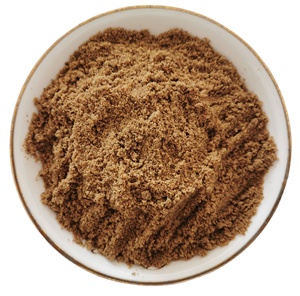
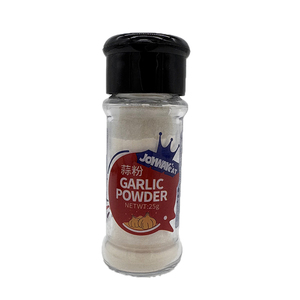
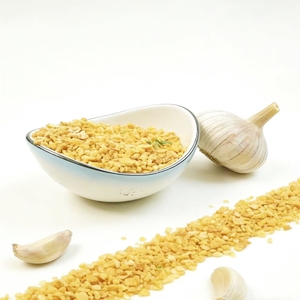
Rather than managing multiple disparate spot-market vendors for individual hydrocolloids (Sodium Alginate, Chitosan, Garlic Powder, Vanilla, Carrageenan), enterprise food companies are partnering with integrated sourcing distributors. Consolidated ordering drastically lowers Minimum Order Quantities (MOQs), reduces inventory holding costs, and minimizes customs paperwork.
Building on decades of food ingredient distribution excellence, our global manufacturing and sourcing network connects high-volume food processors directly to fully audited, state-of-the-art carrageenan production lines.
Food grade carrageenan (E407 / E407a) is a high molecular weight polymer (typically 200 to 800 kDa) fully approved for safe consumption by global regulatory authorities including FDA, WHO/JECFA, and EFSA. Poligeenan (sometimes called degraded carrageenan) is a chemically hydrolyzed, low molecular weight fraction (3 to 15 kDa) produced under extreme acid conditions. Poligeenan is strictly prohibited in food applications and is never produced in food-grade manufacturing facilities.
Syneresis in pure Kappa carrageenan gels can be mitigated by partially replacing Kappa with Iota carrageenan or blending with Locust Bean Gum (LBG) or Konjac. Additionally, controlling the concentration of potassium ($K^+$) and calcium ($Ca^{2+}$) cations and maintaining a finished product pH above 4.3 prevents acid hydrolysis and stabilizes the 3D gel network.
In opaque or semi-opaque food formulations—such as processed meats, poultry injection brines, pet food loaves, and emulsified sausages—Semi-Refined Carrageenan (E407a) delivers identical binding strength and water retention at a significantly lower cost. However, for crystal-clear dessert jellies, soft gels, or clear syrup beverages, Refined Carrageenan (E407) is required due to its low acid-insoluble matter and high optical clarity.
Kappa and Iota carrageenans require heating to approximately 75°C – 80°C for complete solubilization and macromolecular coil displacement in aqueous solutions. Upon cooling below 40°C – 60°C (depending on cation concentration), the coils transform into double helices to form a firm gel. Lambda carrageenan is uniquely soluble in cold liquids without heating.
Procuring food additives through an integrated supply partner allows food manufacturers to merge orders of carrageenan, sodium alginate, dehydrated garlic powder, vanilla, and proteins into single container loads or palletized LTL deliveries. This eliminates multi-vendor management fees, lowers landed freight costs, guarantees unified QA compliance, and optimizes factory inventory control.
Need technical assistance, custom gel strength matching, or sample validation for your food production line? Contact our specialized ingredient supply team today.