Explore our core functional additives and bulk agricultural raw materials supplied to European food processors.
A Comprehensive Guide for European R&D Food Technologists, Procurement Directors, and Regulatory Affairs Specialist in Hamburg and Northern Germany.
Soluble Corn Fiber (SCF), classified chemically as a resistant maltodextrin or indigestible dextrin, represents a paradigm shift in functional food processing across the European Union. Produced via controlled enzymatic hydrolysis and thermal rearrangement of non-GMO corn starch, SCF consists of a complex mixture of glucose polymers joined by both digestible $\alpha-1,4$ glycosidic bonds and non-digestible $\alpha-1,2$, $\alpha-1,3$, and $\alpha-1,6$ glycosidic linkages. This unique chemical structure grants the ingredient high physiological resistance to human digestive enzymes within the upper gastrointestinal tract, allowing it to pass intact into the large intestine where it undergoes selective colonic fermentation.
For food manufacturers operating within the Hamburg metropolitan region—a critical hub for European confectionery, bakery, dairy, and beverage production—solubility, processing tolerance, and organoleptic neutrality are paramount. Unlike traditional fibers such as inulin or coarse cereal fibers, Soluble Corn Fiber delivers exceptional physical stability, low viscosity, clear solubility in aqueous solutions, and zero gritty mouthfeel. This allows formulators to achieve high fiber fortification levels while simultaneously reducing sugar and caloric density without compromising the structural integrity, browning kinetics, or sensory profile of finished consumer goods.
| Analytical Parameter | Technical Standard / Specification | Testing Methodology (EU Certified) | Formulation Significance |
|---|---|---|---|
| Dietary Fiber Assay | ≥ 85.0% or ≥ 90.0% (Dry Basis) | AOAC 2001.03 / AOAC 2009.01 | Enables high-fiber nutrition claims (Regulation EC 1924/2006) |
| Appearance & Physical Form | Fine White Powder or Transparent Liquid Syrup | Visual / Colorimetric Standard | Seamless incorporation without modifying product appearance |
| Caloric Density | 1.9 to 2.0 kcal/g | EU Regulation 1169/2011 Calculation | Crucial for low-calorie and weight management positioning |
| Solubility & Viscosity | 70% w/w at 20°C; Low Viscosity (<15 mPa.s) | Rheometer / Brookfield at 30% concentration | Behaves like sucrose syrup in liquid processing lines |
| Thermal & Acid Stability | Stable down to pH 2.5; withstands UHT / Retort | HPLC Post-Heat Processing Analysis | No breakdown into free glucose during pasteurization/baking |
| Heavy Metals & Micro | Pb ≤ 0.1 mg/kg, As ≤ 0.1 mg/kg; Total Viable <1000 cfu/g | ICP-MS / EU Pharmacopoeia 2.6.12 | Full compliance with EU Regulation EC 1881/2006 limits |
Optimizing traditional recipes and modern functional products for Hamburg's leading food manufacturing segments.
Hamburg's legendary bakery sector requires specialized solutions when reducing sugar in laminated pastries, traditional Franzbrötchen, and high-fiber rye breads. Soluble Corn Fiber maintains moisture retention, prevents staling through water activity ($\alpha_w$) control, and provides necessary solids to maintain dough yield without impacting yeast fermentation dynamics.
With major confectionery plants concentrated in Schleswig-Holstein and Northern Germany, SCF acts as a direct replacement for corn syrup and sucrose in pectin and gelatin-based gummies. It imparts clean sweetness clearance, zero digestive discomfort, and exceptional clarity in high-brix boiling processes.
Northern Germany’s extensive dairy processing operations and rapidly expanding oat-milk production hubs leverage Soluble Corn Fiber to elevate Nutri-Score ratings from C or B up to Grade A. SCF adds full-bodied mouthfeel to low-fat milk, drinkable kefirs, and oat-based dairy alternatives.
The European food sector is governed by stringent consumer transparency laws and active health-driven regulatory initiatives. In Germany, the implementation of the updated Nutri-Score algorithm (2024 revisions) has increased penalties for sugar content while giving greater structural weight to fiber fortification.
Formulations incorporating at least 3g of fiber per 100g qualify for "Source of Fiber", while products containing 6g per 100g qualify for "High Fiber" labeling. Additionally, replacing sugar with SCF supports the authorized claim for lower blood glucose rise post-consumption.
German consumers actively demand clean-label ingredients. Our Soluble Corn Fiber is processed without chemical cross-linking reagents, ensuring declaration as "Soluble Corn Fiber", "Resistant Dextrin", or "Indigestible Dextrin" across EU markets.
Our production facilities adhere strictly to European safety norms, holding FSSC 22000, ISO 9001, Kosher, and Halal certifications to support seamless customs clearance at the Port of Hamburg.
See how replacing 10% of sugar with CE Certified Soluble Corn Fiber alters the nutritional calculation for a standard cereal/snack bar in accordance with current German food guidelines:
| Nutritional Value | Original Recipe | SCF Reformulated |
|---|---|---|
| Sugar Content | 28.5g / 100g | 14.2g / 100g (-50%) |
| Dietary Fiber | 2.1g / 100g | 12.8g / 100g (+500%) |
| Caloric Value | 410 kcal | 345 kcal (-16%) |
| Final Nutri-Score | C Grade | A Grade |
Strategic supply chain infrastructure designed to eliminate lead-time uncertainty for European buyers.
As Germany's largest seaport, Hamburg serves as our primary maritime gateway into Central and Northern Europe. We arrange direct container shipping routes (FCL/LCL) into container terminals Altenwerder and Waltershof, enabling rapid customs handling and onward transport via the Elbe inland waterway network or rail connections to regional distribution centers.
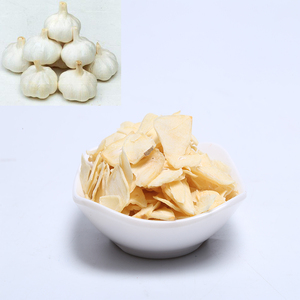
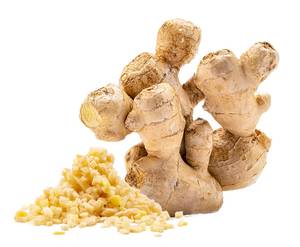
Modeled after world-class ingredient consolidation operations, we remove procurement barriers by allowing buyers to order consolidated shipments. Combine Soluble Corn Fiber with companion hydrocolloids, starches, or dehydrated functional garlic/ginger powders on a single purchase order to lower working capital requirements and reduce landed freight costs.
Soluble Corn Fiber is highly hygroscopic. To guarantee 24-month stability during maritime transits and European storage, our product is packed in heavy-duty multi-wall craft paper bags with heat-sealed PE inner liners (25kg net) or 1,000kg FIBC jumbo bags equipped with anti-static liners, fully stretch-wrapped on heat-treated ISPM-15 wooden pallets.
Delivering technical mastery, rigorous quality control, and robust operational partnership.
From non-GMO corn raw material selection through enzymatic reaction control, continuous chromatography separation, spray drying, and automated packaging, our fully integrated production facility ensures complete batch-to-batch consistency and traceable supply chain security.
Our dedicated food science engineers assist client R&D teams with formulation benchwork, rheological testing, thermal degradation profiling, and sucrose replacement trial analysis. We deliver turnkey ingredient ratios tailored specifically to your processing equipment.
Every delivery is backed by a complete documentation dossier, including Certificate of Analysis (CoA), Non-GMO Statement, Allergen Free Certificate, Heavy Metals Analysis Report, Pesticide Residue Screening (compliant with European Pharmacopoeia), and Radiation Free Declarations.
To protect European buyers from global agricultural price volatility, we offer long-term supply agreements and price-lock contracts up to 12 months, supported by strategic inventory buffering near major transit nodes.
Direct answers regarding quality standards, importing logistics, and technical functionality.
Yes. Soluble Corn Fiber / Resistant Dextrin produced via enzymatic hydrolysis of corn starch is recognized throughout the European Union as a traditional food ingredient / dietary fiber pursuant to Regulation (EU) No 1169/2011. It does not require Novel Food authorization under Regulation (EU) 2015/2283, provided it meets established purity criteria and standard specifications for indigestible dextrins.
Our standard MOQ for direct factory maritime shipments to Hamburg is 1 Full Container Load (FCL 20ft, approx. 10 to 12 Metric Tons depending on packaging density). However, through our consolidated order delivery program, smaller trial lots (e.g., 1 to 3 pallets) can be arranged by combining shipments with our other functional ingredient categories.
Soluble Corn Fiber exhibits exceptional thermal and acid stability. The non-digestible glycosidic bonds ($\alpha-1,2$ and $\alpha-1,3$) remain stable at processing temperatures up to 160°C and across pH ranges from 2.5 to 8.0. Unlike inulin, which undergoes acid hydrolysis into free fructose under low pH or high heat, SCF maintains its dietary fiber integrity without releasing unwanted simple sugars.
Absolutely. Polyols such as maltitol, sorbitol, or erythritol often induce osmotic diarrhea when consumed in higher quantities due to low intestinal tolerance threshold limits. Soluble Corn Fiber has a significantly higher digestive tolerance threshold (>50g per day) because it undergoes gradual fermentation by colonic microflora rather than rapid osmotic draw. It allows manufacturers to replace up to 50% of sugar in confectionery products while avoiding gastrointestinal warning labels.
Every shipment delivered into Hamburg or EU territory includes a full customs dossier: Commercial Invoice, Packing List, Bill of Lading, Batch-Specific Certificate of Analysis (CoA), ISO/FSSC 22000 Quality Certificate, Non-GMO Declaration, Kosher/Halal Certificates, Phytosanitary Certificate, and REACH/EFSA compliance statements.
Yes, we provide 500g to 2kg evaluation samples free of charge for qualified European food manufacturers, R&D technologists, and procurement specialists. Samples are dispatched via express courier directly to your facility along with technical data sheets (TDS) and safety data sheets (SDS).
Streamline your raw material sourcing, optimize your formulation Nutri-Score, and secure reliable bulk delivery to Hamburg and across Europe.