Precision-formulated bulk raw materials and laboratory technology distributed across North African industrial hubs.

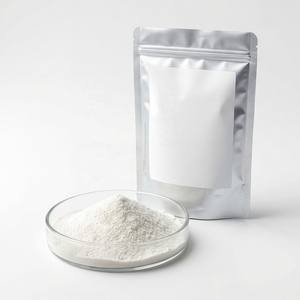
Maltodextrin ($C_6H_{10}O_5)_n \cdot H_2O$ is a complex saccharide hydrocolloid derived through controlled partial enzymatic or acid hydrolysis of high-purity non-GMO botanical starches (primarily corn, cassava, or wheat). In the context of modern food architecture, beverage formulation, and pharmaceutical processing, maltodextrin serves as an indispensable functional ingredient. It acts as a spray-drying carrier matrix, mouthfeel enhancer, bulking agent, crystallization inhibitor, and moisture regulator.
For industrial food processors operating in Morocco, sourcing custom OEM maltodextrin powder requires a precise understanding of Dextrose Equivalent (DE) values. The DE value measures the degree of starch polymer hydrolysis, directly governing solubility, osmolality, sweetness perception, hygroscopicity, and glass transition temperature ($T_g$).
Formulation Insight: Lower DE maltodextrins (DE 10–12) provide superior film-forming capability, high solution viscosity, and minimal hygroscopicity—ideal for spray-drying sensitive flavors and encapsulation. Higher DE ranges (DE 15–20) deliver rapid cold-water solubility, enhanced clarity, and controlled sweetness without masking subtle aromatic notes.
| Parameter / Grade | OEM Maltodextrin DE 10–12 | OEM Maltodextrin DE 13–17 | OEM Maltodextrin DE 18–20 |
|---|---|---|---|
| Physicochemical Form | Fine white powder, low sweetness | Fine white powder, neutral taste | Highly soluble powder, slight sweetness |
| Solubility Profile | Moderate cold water solubility | Rapid dissolution rate | Complete clarity in liquid systems |
| Bulk Density (g/l) | 450 – 550 g/L | 480 – 580 g/L | 500 – 620 g/L |
| Primary Function | Encapsulation carrier, binder, fat replacer | Texture builder, stabilizer, bulking agent | Quick-dissolve drink mix, energy matrix |
| Hygroscopicity Index | Very Low (< 4% moisture pickup) | Moderate | Higher moisture absorption tendency |
| Target Applications | Spice spray-drying, processed meats | Dairy powders, sauces, confectionery | Sports nutrition, instant sachets, pharma |
Morocco's agri-food sector represents one of the primary drivers of the national economy. With accelerated modernization under regional industrial framework agreements, food processors in Casablanca, Agadir, Fes, Tangier, and Meknes require high-performance, Halal-certified OEM maltodextrin tailored to specific thermal and environmental stress profiles.
In Morocco's expanding dairy hubs (e.g., Casablanca and Tadla processing corridors), maltodextrin (DE 12–15) functions as a texture stabilizer and solids booster in low-fat yogurts, labneh, and powdered milk formulations. It prevents syneresis, enhances creamy mouthfeel, and maintains structural stability during ambient logistics across high-temperature southern transport routes.
Moroccan traditional sweets and commercial confectionery producers utilize OEM Maltodextrin (DE 15–20) to regulate sucrose crystallization in syrup matrixes. It preserves texture in stored packaged pastries, controls water activity ($a_w$), and extends shelf-life under high humectancy conditions without introducing excessive sweetness.
As a global hub for spice formulation, Morocco's seasoning manufacturers leverage DE 10–12 maltodextrin as an inert encapsulation carrier for spray-drying essential oils, paprika extracts, and complex seasoning mixes (such as Ras el Hanout extracts). It protects volatile flavor aromatics against oxidative degradation and prevents caking in hot humid zones.
With rising urban health awareness in Rabat and Casablanca, manufacturers of sports hydration mixes and instant powdered beverages rely on fast-dissolving OEM maltodextrin (DE 18–20). It delivers balanced osmolality, rapid carbohydrate bioavailability, and instant dispersion without clumping when mixed in cold water.
For Moroccan pharmaceutical facilities operating in the Greater Casablanca medical industrial zone, specific low-microbial OEM maltodextrin grades act as direct-compression binders and wet-granulation diluents. Fully compliant with Ph. Eur. and USP standards, these excipients guarantee tablet hardness uniformity and precise dissolution timing.
The Moroccan industrial ingredient sector is undergoing rapid evolution. Driven by national economic initiatives like the Génération Hydrocarbon et Agroalimentaire and expanded port capacity at Tanger-Med and Casablanca, bulk sourcing strategies must align with critical local parameters:
Key technical and logistical questions answered for purchasing teams, factory managers, and R&D specialists operating in Morocco.
DE 10–12 is the industry standard for spray-drying flavor oleoresins and spice extracts. Its high molecular weight provides optimal matrix encapsulation, preventing heat degradation and minimizing moisture absorption during storage in warm regions like Marrakech or Agadir.
Yes. All bulk OEM maltodextrin batches supplied to Morocco are 100% Halal certified by internationally recognized accrediting bodies aligned with IMANOR standards, processed using non-animal enzymatic hydrolysis.
Every shipment is accompanied by a full ONSSA-compliant documentation dossier: Batch-specific Certificate of Analysis (COA), Non-GMO Statement, Heavy Metal & Microbiological Assay, Allergen-Free Guarantee, Halal Certificate, and ISO 22000 / FSSC 22000 verification.
Standard OEM bulk orders are supplied in 25kg multi-wall paper bags with PE liners, starting from full-pallet quantities (1,000 kg) up to FCL (Full Container Load) 20ft/40ft shipments. Order consolidation programs allow mixed-ingredient containers to lower working capital.
Low DE grades (DE 10-15) exhibit superior glass transition temperatures ($T_g$), rendering them highly resistant to caking and moisture absorption. We also offer specialized moisture-barrier multi-ply pallet wraps for long-distance transit.
Absolutly. Custom OEM services include particle size customization (ranging from fine powder 80-mesh to agglomerated quick-dissolve granules) and bulk density adjustments (400 to 650 g/L) tailored to your dosing machinery.
Managing multiple ingredient vendors creates operational friction, administrative overhead, and logistics bottlenecks. Partnering with a consolidated ingredient sourcing leader like Essex Food Ingredients streamlines your end-to-end procurement process.
Instead of managing dozens of individual suppliers, purchase orders, and ocean bills of lading, manufacturers can source over 3,000 hydrocolloids, proteins, colors, and emulsifiers through a single consolidated purchase order.
Our raw material portfolio is backed by stringent quality assurance protocols. Every production run undergoes rigorous HPLC, atomic absorption, and microbiological testing to ensure complete batch-to-batch consistency.
Leveraging deep global distribution networks and strategically located logistics hubs, we maintain safety stock buffers to protect your production lines against freight disruptions or seasonal demand spikes.
Connect directly with our technical sourcing specialists to request custom samples, detailed pricing structures, and full ONSSA compliance documentation.
Inquire Now