Explore our consolidated ingredient sourcing capabilities tailored for food processing facilities across Hanoi, Haiphong, and Northern Vietnam.
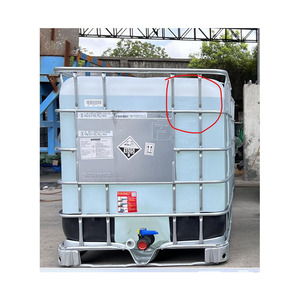
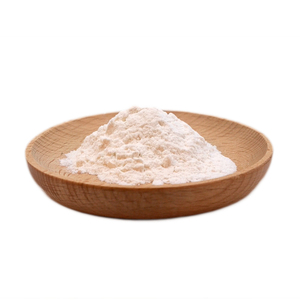
Sodium Acid Pyrophosphate (SAPP), chemically identified as Disodium Dihydrogen Pyrophosphate (Na₂H₂P₂O₇) with CAS Number 7758-16-9 and European Food Additive Code E450(i), represents an indispensable inorganic buffering, leavening, and sequestering agent widely utilized across modern food manufacturing. As Hanoi accelerates its transition from traditional artisanal food preparation to automated, large-scale industrial food processing, the precise control of acid-base chemical kinetics becomes a key determinant of final product quality.
Our enterprise stands at the forefront of chemical synthesis and OEM custom blending, manufacturing specialized grades of SAPP tailored to the environmental, logistical, and processing demands of Northern Vietnam. Unlike standardized chemical trading firms, we engineer SAPP with targeted Rate of Reaction (ROR) metrics ranging from ROR 15 (slow-reacting) to ROR 28 (medium-reacting) and ROR 40 (fast-reacting). This granular control allows food technologists in Hanoi to manipulate CO₂ gas liberation timing precisely during mixing, bench-rest, and thermal baking phases.
All food-grade Sodium Acid Pyrophosphate shipped to Hanoi's industrial corridors (such as Quang Minh, Thach That, and Bac Thang Long Industrial Zones) strictly complies with standard specifications regulated under standard global purity frameworks (FCC X, EU 231/2012, and Vietnam Ministry of Health Circular 24/2019/TT-BYT).
| Chemical Property / Parameter | Guaranteed Standard Specification | OEM Custom Capability Range | Primary Industrial Significance |
|---|---|---|---|
| Assay (Na₂H₂P₂O₇) Content | 95.0% - 100.5% | ≥ 99.0% Ultra-Pure Grade | Ensures precise stoichiometric acid-base buffering |
| P₂O₅ (Phosphorus Pentoxide) | 63.0% - 64.5% | 63.5% ± 0.3% Controlled | Determines ionic strength and water binding capacity |
| pH Value (1% aqueous solution) | 3.8 - 4.4 | 4.0 ± 0.2 Tailored | Controls dough dough acidity and protein stabilization |
| Rate of Reaction (ROR at 2 minutes) | ROR 28 (Standard) | ROR 15, ROR 22, ROR 28, ROR 40 | Controls CO₂ gas release velocity in baking/leavening |
| Heavy Metals (as Lead - Pb) | ≤ 2.0 mg/kg (PPM) | ≤ 1.0 mg/kg Ultra-Clean | Meets strict export requirements for EU & US markets |
| Arsenic (As) | ≤ 1.0 mg/kg (PPM) | ≤ 0.5 mg/kg Safe Trace | Protects consumer health in baby food & broad applications |
| Particle Size (Bulk Mesh Size) | 80 - 100 Mesh Fine Powder | 60 to 200 Mesh Superfine | Determines dissolution rate and blending uniformity |
Hanoi serves as the commercial and culinary heart of Northern Vietnam. The surrounding industrial geography requires highly stable, climatically adapted raw chemical inputs. Below is an in-depth breakdown of how our OEM Sodium Acid Pyrophosphate formulations resolve key manufacturing challenges within local facilities.
In Hanoi's extensive fresh and instant noodle processing plants, starch retrogradation, enzymatic darkening, and loss of tensile elasticity pose constant quality risks. High ambient humidity in Northern Vietnam accelerates dough enzymatic oxidation, causing fresh rice noodles (Bún, Phở) to yellow within hours.
The OEM SAPP Advantage: Our specialized SAPP acts as a powerful polyphosphate chelating agent. By binding trace divalent metal ions (Fe²⁺, Cu²⁺) naturally present in local municipal water supplies, SAPP suppresses enzymatic darkening. Furthermore, SAPP interacts with wheat gluten and rice starch proteins, maintaining optimal water binding capacity and delivering the coveted "chewy" bite (chewy texture/giòn dai) without resorting to illegal additives like borax.
Industrial bakeries and frozen steamed bun (Bánh Bao) factories in the Hanoi outskirts demand uniform rising behavior and pristine white appearance. Standard sodium bicarbonate releases gas too rapidly during mixing, creating collapsed doughs or yellowish discoloration.
The OEM SAPP Advantage: By utilizing our custom SAPP ROR 15 or ROR 22 (Slow Reaction), leavening gas generation is delayed until heat is applied inside the industrial steaming tunnel or deck oven. This produces a micro-porous crumb structure, excellent volume expansion, and eliminates the bitter alkaline aftertaste commonly caused by unbuffered leavening acids.
While major marine processing centers lie along coastal zones near Haiphong Port, Hanoi hosts crucial cold-chain processing, packaging, and export logistics headquarters. Marine proteins (shrimp, pangasius, squid) lose intracellular water, weight, and soluble proteins during thaw cycles.
The OEM SAPP Advantage: When blended with Sodium Tripolyphosphate (STPP) and Hexametaphosphate, our high-purity SAPP adjusts the muscle pH away from its isoelectric point. This increases muscle fiber spacing, reduces thaw drip loss by up to 8%, preserves natural succulent juiciness, and prevents struvite crystal formation in canned marine items.
Snack manufacturers and frozen potato processing plants supplying Hanoi's quick-service restaurants face severe issues with non-enzymatic browning and after-cooking darkening (ACD) caused by ferric iron-chlorogenic acid complexes.
The OEM SAPP Advantage: Applying an SAPP blanching dip (0.5% - 1.0% concentration) sequesters iron ions before thermal cooking. This prevents the formation of dark gray or black compounds, preserving bright natural potato color in chips, French fries, and dehydrated vegetable flakes.
The food manufacturing sector in Hanoi is experiencing a profound transformation driven by shifting consumer dynamics, stringent regulatory enforcement, and expanding international trade agreements. Understanding these macro shifts enables us to deliver tailored OEM chemical solutions that keep local manufacturers competitive.
The Vietnam Food Administration (VFA) under the Ministry of Health has intensified post-market surveillance regarding food additive purity and heavy metal residues. Compliance with Circular 24/2019/TT-BYT mandates that all phosphate additives carry verified Certificate of Analysis (COA) documents indicating strict limits on Lead, Arsenic, and Cadmium. Our OEM SAPP undergoes rigorous ICP-MS testing, providing food factories in Hanoi total regulatory safety during government audits.
Vietnamese consumers are increasingly demanding clean-label, safe processed foods. Regulatory crackdowns on toxic illegal preservatives (such as hàn the/borax in noodles and sausages) have forced food scientists in Hanoi to adopt legal, functional phosphate salts. Our custom SAPP blends provide superior firmness, texture, and shelf-life extension in complete compliance with international food safety standards.
With the rapid growth of retail modern trade and global export channels under EVFTA (EU-Vietnam Free Trade Agreement) and RCEP, food manufacturers in Hanoi are scaling production of frozen snacks, dim sum, and instant meals. These products undergo harsh freeze-thaw cycles. Custom SAPP formulations buffer starch molecules against syneresis (water separation), ensuring products maintain premium eating quality after thawing.
As a senior manufacturer and direct exporter with decades of experience serving South-East Asian chemical supply chains, we provide unmatched strategic advantages for food ingredient buyers, distributors, and contract manufacturers operating in Vietnam.
We offer fully customized OEM manufacturing. Whether your formulation requires a specific Rate of Reaction (ROR 15, 22, 28, 40) or custom particle size distribution (from coarse granules to 200-mesh superfine powders for rapid dissolution), our R&D center configures the exact physical and chemical metrics to match your production line.
Leveraging direct maritime routes from our sea port manufacturing hubs to Haiphong Port, followed by bonded truck transport to Inland Container Depots (ICD My Dinh, ICD Gia Lam, ICD Dinh Vu), we guarantee seamless shipping logistics. We manage customs documentation under ACFTA Form E, eliminating import tariff barriers for Vietnamese importers.
Our state-of-the-art production facility operates under rigorous international quality management systems. Every batch of SAPP is backed by ISO 22000, HACCP, FSSC 22000, Halal (MUI/JAKIM recognized), and Kosher certifications, allowing your finished food products to seamlessly enter global retail markets.
Selecting the correct Rate of Reaction (ROR) is vital to preventing premature gas release, crumb collapse, or textural density. The chart below illustrates standard OEM SAPP classifications and their specific target processing environments:
| SAPP Grade Category | Gas Release Velocity (2 min / 8 min) | Ideal Thermal Processing Temp | Primary Industrial Food Application |
|---|---|---|---|
| SAPP ROR 15 (Slow) | 12% - 18% Initial Release | High Heat (> 100°C Steaming/Baking) | Refrigerated canned doughs, frozen steamed buns (Bánh Bao), slow-bake industrial biscuits |
| SAPP ROR 22 (Medium-Slow) | 19% - 25% Initial Release | Moderate to High Heat (80°C - 160°C) | Commercial cake mixes, specialty bread improvers, batter-coated fried foods |
| SAPP ROR 28 (Standard Medium) | 26% - 32% Initial Release | Standard Baking (150°C - 200°C) | All-purpose baking powders, instant doughnut mixes, potato processing dip solutions |
| SAPP ROR 40 (Fast) | 38% - 44% Initial Release | Rapid Low Heat Activation | Instant cake batters, high-speed automated muffin lines, rapid-rise leavening blends |
Clear technical, logistical, and commercial answers for purchasing executives and food technologists sourcing SAPP for Vietnamese factories.
A: Our standard sea freight shipping lead time from our primary port to Haiphong Port is approximately 5 to 7 days. Customs clearance and inland trucking transfer to Hanoi industrial zones (such as Quang Minh or Thach That) typically take an additional 2 to 3 business days upon receipt of completed documents (Form E, COA, Bill of Lading).
A: Yes, absolutely. As an authorized exporter, we issue official ACFTA Form E certificates with every FCL (Full Container Load) shipment. This allows Vietnamese importers in Hanoi to enjoy 0% or significantly reduced import tariff rates, lowering landed cost.
A: SAPP is a hygroscopic powder that can absorb moisture if exposed to high relative humidity. To combat Northern Vietnam's humid climate, our OEM packaging features a heavy-duty 25kg multi-wall kraft paper bag combined with an inner high-density polyethylene (HDPE) thermal-sealed liner bag. Pallets are fully shrink-wrapped with moisture-barrier film.
A: Yes. Our food application lab offers full reverse-engineering and sample matching services. You can send a sample of your current SAPP chemical to our facility; our chemists will analyze its ROR curve, pH profile, P₂O₅ concentration, and particle size, delivering an exact OEM match.
A: Our standard MOQ for standard food-grade SAPP (such as SAPP ROR 28) is 1 FCL (approx. 20 to 25 metric tons). For customized ROR formulations or customer-branded OEM packaging bags, our minimum order threshold is typically 1 FCL to cover bag printing plate setups and specialized batch synthesis.
A: Yes. All our SAPP products hold internationally accredited Halal certifications (recognized by JAKIM, MUI, and Vietnam Halal Center) as well as Kosher certification. They contain zero animal-derived raw materials, rendering them 100% safe for vegetarian, vegan, and religious dietary compliance.
Partner with a direct chemical manufacturer capable of tailoring SAPP reaction rates, particle sizes, and packaging specifically for your processing plants in Hanoi and Northern Vietnam. Contact our technical team today for instant quotes, COA documentation, and free lab evaluation samples.