Engineered for precise phase stabilization, texture control, and shelf-life extension across DACH food processing operations.

In modern industrial food manufacturing across Germany and the broader European Union, emulsifiers play a crucial role far beyond simply mixing immiscible phases. Emulsifiers act as surface-active agents (surfactants) that decrease interfacial tension at the oil-water boundary, stabilize thermodynamic energy states, and dictate crystal network formation in multi-phase food architectures. For food technologists and R&D specialists in Berlin’s expanding food technology hubs, selecting the appropriate amphiphilic compound requires a detailed understanding of Hydrophilic-Lipophilic Balance (HLB), critical micelle concentration (CMC), and Phase Inversion Temperature (PIT).
Food emulsions—whether water-in-oil (W/O) such as spreads, or oil-in-water (O/W) such as plant-based beverages—are inherently thermodynamically unstable systems. Without amphiphilic stabilization, droplet coalescence, flocculation, creaming, and Ostwald ripening cause rapid phase separation. By deploying structured monoglycerides (DMG/GMS), enzymatic lecithin (E322), or synergistic hydrocolloid networks (Xanthan Gum / Carrageenan), manufacturers achieve electrostatic repulsions exceeding -30 mV Zeta potential, establishing robust steric barriers that guarantee shelf stability across temperature variations.
The Berlin-Brandenburg metropolitan region has rapidly developed into one of Central Europe's most innovative centers for food processing, plant-based protein development, and advanced bakery tech. Meeting European Food Safety Authority (EFSA) standards while satisfying strict clean-label demands requires an optimized ingredient portfolio. Our manufacturing and export infrastructure ensures high-purity, batch-consistent food-grade emulsifiers delivered directly to German facilities with full technical support.
Tailored emulsifier solutions designed for regional production challenges across Berlin, Brandenburg, and northern Germany.
Berlin’s large-scale commercial bakeries rely on Glycerol Monostearate (GMS / DMG E471) to interact with amylose in starch chains. This forms amylose-lipid complexation that delays starch retrogradation, preserves crumb softness, and extends bread shelf-life. In gluten-free bakery formulations, combining 200 Mesh Xanthan Gum with distilled monoglycerides restores dough viscoelasticity and gas retention.
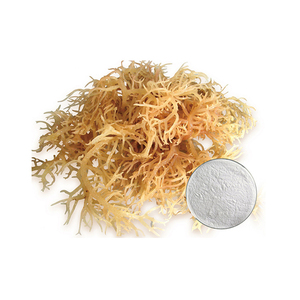
As Europe's leading epicenter for vegan food startups, Berlin-Brandenburg demands advanced lipid binding in high-moisture extrusion (HMEC) meat alternatives. Utilizing Sodium Alginate (E401) alongside refined Carrageenan M213 creates thermo-irreversible gel structures, locking in moisture and plant lipids to replicate the juicy mouthfeel and bite of traditional sausages and burgers during high-heat pan frying.
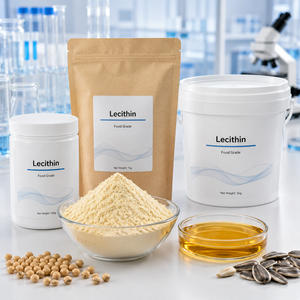
In oat, almond, and soy-based dairy alternatives processed under Ultra-High Temperature (UHT) regimes, phase separation and feathering in hot acidic coffee present significant challenges. Non-GMO Soy Lecithin E322 coupled with micro-dosed Kappa Carrageenan forms electrostatic complexes with plant proteins, preventing protein precipitation and guaranteeing smooth pourability.
In industrial chocolate production, viscosity control during conching is vital. De-oiled and liquid Soy Lecithin E322 reduces yield stress and plastic viscosity in molten chocolate, allowing precise coating, molding, and significant reduction in expensive cocoa butter usage without compromising chocolate snap or melt characteristics.
Cold-processed emulsified sauces require rapid hydration and high shear tolerance. Xanthan Gum (80/200 Mesh) yields pseudoplastic (shear-thinning) rheology—offering high viscosity at rest for stable particle suspension, while thinning under shear during pumping and pouring. When combined with modified emulsifiers, it guarantees freeze-thaw stability across logistics channels.
Equipping Berlin innovation labs with precision tools such as the Angni AD300L-H High Shear Dispersing Emulsifying Machine allows food engineers to accurately simulate plant-scale homogenizers. Test micelle formation, droplet breakdown down to sub-micron scales, and refine formulations before commercial manufacturing runs.
Compare chemical attributes, Hydrophilic-Lipophilic Balance (HLB), and functional dosage parameters for precise formulation selection.
| Ingredient Name | E-Number / CAS | HLB Value Range | Primary Function | pH Stability | Typical Dosage Rate |
|---|---|---|---|---|---|
| Soy Lecithin (Liquid/Powder) | E322 / 8002-43-5 | 3.0 – 9.0 (Adjustable) | W/O & O/W Emulsifier, Viscosity Modifier | 4.0 – 9.0 | 0.3% – 1.0% |
| Glycerol Monostearate (GMS / DMG) | E471 / 31566-31-1 | 3.8 – 5.2 (Lipophilic) | Starch Complexing, Dough Conditioning, Aeration | 5.0 – 8.0 | 0.2% – 0.8% |
| Xanthan Gum (80 / 200 Mesh) | E415 / 11138-66-2 | Hydrocolloid (N/A) | Pseudoplastic Thickener, Emulsion Stabilizer | 2.0 – 11.0 | 0.1% – 0.5% |
| Refined Kappa Carrageenan | E407 / 9000-07-1 | Hydrocolloid (N/A) | Thermo-reversible Gelling, Protein Binding | 5.0 – 10.0 | 0.05% – 0.4% |
| Sodium Alginate (99% Pure) | E401 / 9005-38-3 | Hydrocolloid (N/A) | Cold-set Gelling, Film-Forming, Spherification | 4.5 – 10.0 | 0.2% – 1.2% |
The German food manufacturing industry operates under some of the world's most demanding consumer expectations and regulatory standards. Sourcing food additives in Berlin requires aligned supply chains that proactively address regulatory shifts, environmental mandates, and clean-label trends.
German consumers increasingly scrutinize ingredient lists on packaging. There is a strong industry shift toward replacing synthetic emulsifiers (such as DATEM or Polysorbates) with naturally derived options such as non-GMO Sunflower or Soy Lecithin (E322) and physical hydrocolloids. Formulators in Berlin leverage enzymatic modifications to broaden the functional range of natural lecithins without compromising clean-label positioning.
Environmental accountability is paramount across DACH procurement departments. Monoglyceride products (GMS/DMG) sourced for export into Berlin must comply with RSPO (Roundtable on Sustainable Palm Oil) Mass Balance or Segregated certification standards, or be manufactured entirely from rapeseed, sunflower, or soy bases to support scope 3 emissions reductions.
Under strict EU Regulations (EC) No 1829/2003 and 1830/2003, food producers in Germany must ensure complete batch-level traceability for genetically modified organisms. Our soy-derived emulsifiers offer strict Identity Preserved (IP) non-GMO documentation, backed by PCR testing at independent accredited laboratories prior to importation into European hubs.
Streamlining raw material procurement with consolidated purchasing, flexible logistics, and rigorous quality assurance.
Instead of managing dozens of individual chemical suppliers, customs brokers, and separate freight schedules, your purchasing department can consolidate over 3,000 functional food ingredients—including emulsifiers, starches, hydrocolloids, and phosphates—into one single purchase order. This lowers landed administrative costs and simplifies accounts payable.
Direct factory ordering often imposes massive minimum order quantities that tie up working capital and warehouse floor space. We purchase in high volume and hold strategized regional inventory. This allows us to supply lower MOQs matching your exact production schedules—supporting both agile Berlin food tech startups and high-capacity manufacturing facilities.
Every lot exported to Berlin comes with comprehensive documentation: Certificates of Analysis (CoA), Technical Data Sheets (TDS), Safety Data Sheets (SDS under REACH), Kosher, Halal, ISO 22000, and FSSC 22000 certifications. Full lot-traceability guarantees compliance with EFSA directives.
Essential guidance for purchasing, quality control, and R&D teams sourcing food emulsifiers in Berlin & Germany.
Yes. All emulsifiers in our catalog—including Soy Lecithin (E322), Distilled Monoglycerides (E471), Xanthan Gum (E415), and Carrageenan (E407)—strictly adhere to EU Regulation (EC) No 1333/2008 on food additives and Regulation (EU) No 231/2012 laying down food additive specifications. Full regulatory dossiers and purity assurances are provided with every order.
For stocked items located in our European distribution hubs, standard transit to Berlin and the surrounding Brandenburg region takes 48 to 72 hours via road freight. For custom manufacturing runs or direct international exports, containerized sea freight to Hamburg or Rotterdam followed by bonded rail/truck transport is typically fulfilled within 3 to 4 weeks.
Absolutely. We support R&D teams by providing 500g to 2kg evaluation samples complete with lot-specific CoAs. We also offer access to high-shear dispersion testing equipment details (such as the Angni AD300L-H unit) to assist in scaling benchtop trials up to plant production level.
Our soy lecithin products are sourced exclusively under Identity Preserved (IP) non-GMO audit protocols. Each export batch undergoes quantitative Polymerase Chain Reaction (PCR) testing to verify that GMO DNA content remains strictly below the EU labeling threshold of 0.9%, with documentation attached to the shipping paperwork.
We supply a specialized range of Glycerol Monostearate (GMS/DMG) and specialized esters synthesized entirely from rapeseed oil, sunflower oil, or non-GMO soy oil, completely eliminating palm oil content while maintaining identical HLB values and melting profiles.
By bundling multiple functional ingredients (e.g., combining your emulsifier, thickener, starch, and preservative purchases into a single container or truckload), you drastically reduce per-unit freight charges, eliminate multiple customs processing fees, and lower administrative handling costs in your procurement office.
Speak directly with our food technologists and regional supply partners to request custom quotes, technical specifications, and pilot samples delivered directly to your Berlin facility.