Toll-free: 1 (800) 441-1017 HQ: 9 Lee Blvd, Frazer, PA 19355
3,000+ ingredients · One purchase order · On time, in full

Specialty Food Grade Phosphates Manufacturers & Factory in Spain

High-Purity Functional Phosphates & Custom Blends Engineered for Spanish & European Food Processors

Featured Food Ingredients & Functional Additives

Consolidate your procurement with our raw material portfolio designed for meat, seafood, bakery, and dairy processing operations.
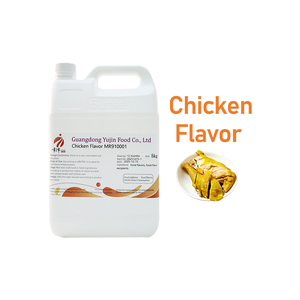
Food Grade Low Cost Chicken Flavor Essence Liquid Concentrated Fragrance

Food Grade Low Cost Chicken Flavor Essence Liquid Concentrated Fragrance for Snack Instant Noodles and Savory Food Flavor

Get Catalog
Soy Protein Concentrate Food Grade Powder

Soy Protein Concentrate Food Grade Powder Wholesale Supplier for International Food Ingredient Buyers

Get Catalog
Food Grade GMS DMG Glycerol Monostearate Emulsifier

Food Grade GMS DMG Glycerol Monostearate Emulsifier For Baking Pastry Bread

Get Catalog
Kappa Food Grade Refined 200 Mesh Thickeners Carrageenan

Kappa Food Grade Refined 200 Mesh Thickeners Emulsifiers Carrageenan

Get Catalog
Bulk Supply Vanilla Powder for Food Ingredient Distributors

Bulk Supply Vanilla Powder for Food Ingredient Distributors Bakery Chains and Global Commercial Buyers Seeking Reliable Source

Get Catalog
Food Grade Peanut Extract 98% Peanut Oligopeptide Powder

Bulk Supply Food Grade Natural Nutritional Enhancement Peanut Extract 98% Peanut Oligopeptide Powder

Get Catalog
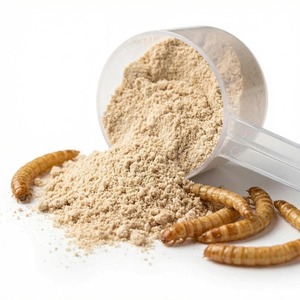
Bulk Defatted Mealworm Powder High Protein Pet Food Ingredient

Bulk Defatted Mealworm Powder High Protein Pet Food Ingredient for Animal Feed

Get Catalog
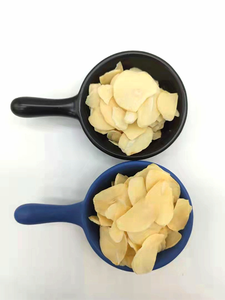
China New Products Bulk Granulated Dehydrated Garlic Powder

China New Products Bulk Granulated Dehydrated Garlic Powder

Get Catalog
3,000+
Food Ingredients Stocked
100%
EU Regulation Compliant
< 48 hrs
Regional Delivery Lead Time
ISO/FSSC
Certified Supply Chain

Technical Whitepaper: Specialty Food Grade Phosphates Manufacturing & Industrial Applications in Spain

Spain stands as one of Europe's top food production powerhouses, renowned globally for its meat processing sector (such as Jamón Ibérico, Lomo, and cooked ham products), a robust seafood processing hub in Galicia, high-capacity bakery production in Catalonia and Madrid, and an evolving dairy sector. Meeting the rigorous quality standard of these sectors demands advanced chemical precision in functional food additives—most notably, Specialty Food Grade Phosphates.

As a global ingredient sourcing authority working alongside state-of-the-art manufacturing facilities, we deliver high-purity orthophosphates, pyrophosphates, tripolyphosphates, and custom-engineered polyphosphate blends tailored strictly to European regulatory metrics (EC Regulation 1333/2008). Phosphates serve as irreplaceable multi-functional agents: controlling pH, buffering systems, sequestering divalent metal ions (Ca²⁺ and Mg²⁺), emulsifying proteins, and maximizing water-holding capacity (WHC) to prevent purge loss during thermal processing and prolonged cold storage.

Biochemical Mechanisms of Action in Food Matrices

The functionality of specialty food phosphates is dictated by their chain length, P₂O₅ concentration, and solubility kinetics. Understanding their physical-chemical dynamics allows Spanish R&D teams and plant managers to optimize yield without sacrificing organoleptic texture or clean-label targets:

  • Moisture Retention & Protein Extraction (Actomyosin Solubilization): Alkaline phosphates such as Sodium Tripolyphosphate (STPP / E451i) and Tetrasodium Pyrophosphate (TSPP / E450iii) shift meat matrix pH away from the isoelectric point of muscle proteins (pH ~5.1 to 5.3). By increasing ionic strength and binding divalent calcium cross-links, phosphates dissociate the actomyosin complex into actin and myosin filaments. This exposes hydrophilic sites, binding water tightly within the protein lattice.
  • pH Buffering & Stabilization: Monosodium Phosphate (MSP / E339i) and Disodium Phosphate (DSP / E339ii) provide precise buffering capabilities in dairy and processed cheese formulations, preventing protein coagulation, syneresis, and phase separation during high-temperature pasteurization or UHT processing.
  • Controlled Leavening Kinetics in Bakery Systems: Sodium Acid Pyrophosphate (SAPP / E450i) acts as a specialized chemical leavening acid. Manufactured with varying Neutralization Values (NV) and Rate of Reaction (ROR) profiles—from slow-reacting SAPP 28 to fast-reacting SAPP 40—it permits exact control over gas release in industrial bakery doughs, tortas, and frozen par-baked products.
  • Trace Metal Chelation: Polyphosphates sequester trace iron and copper ions that act as pro-oxidants, thereby inhibiting lipid oxidation, retarding rancidity, and maintaining natural color stability in seafood and cured meat products.

Localized Application Matrix across Spain's Key Food Processing Hubs

Food processing requirements vary dramatically across Spain's autonomous communities. Below is an engineering overview of how specialty phosphates are integrated into specific regional industry applications:

Spanish Region & Sector Primary Technical Challenge Recommended Phosphate Solution Functional Impact & Benefit
Galicia & Cantabria
Seafood & Cephalopod Processing
Drip-loss during freezing, texture degradation, and discoloration in octopus/squid. Custom Neutral STPP / Sodium Polyphosphate Blends (E451 / E452) Prevents protein denaturation during blast freezing; retains yield and succulence upon thawing; maintains natural gloss.
Catalonia & Aragon
Cooked Hams & Charcuterie
Purge loss in vacuum packs, sliceability weakness, emulsification failure. Alkaline Pyrophosphate & Tripolyphosphate Blends (TSPP + STPP) Maximizes myosin extraction, improves emulsion stability in frankfurters, ensures clean, non-crumbling sliceability.
Extremadura & Andalusia
Cured Meat Marination
High salt concentration limiting hydration; uneven brine absorption. High-Solubility Potassium Phosphates (TKPP / DKP) Provides rapid dissolution in cold brine; reduces sodium levels; promotes uniform brine uptake in injection processes.
Valencia & Murcia
Fruit & Vegetable Canning
Softening of plant tissues, mineral clouding in clarity-critical brines. Sodium Hexametaphosphate (SHMP / E452i) & Acid Phosphates Chelates hard water ions (Ca²⁺/Mg²⁺) to prevent cloudiness; preserves pectin structure and crispness in canned produce.
Castile and León / Madrid
Industrial Bakery & Frozen Dough
Uneven biscuit thickness, premature gas release prior to baking oven entry. Tailored SAPP (SAPP 15, SAPP 28, SAPP 40) Leavening Acids Delivers predictable carbon dioxide release timing matched to continuous baking lines; ensures uniform crumb structure.

Key Technological Capabilities & Product Offerings

Engineered for high-volume Spanish manufacturing facilities demanding strict batch-to-batch consistency and full traceability.

Sodium Free & Low-Sodium Potassium Phosphates

Formulated specifically to support Spanish food processors complying with EU sodium reduction initiatives. Potassium Tripolyphosphate (KTPP) and Dipotassium Phosphate (DKP) deliver equivalent ionic functionality without adding to the finished product's sodium profile on Nutri-Score labeling.

Custom Synergistic Hydrocolloid Blends

Combining high-purity phosphates with Carrageenan (Kappa/Iota), Gellan Gum, or Soy Protein Concentrate to create ready-to-use functional systems for injected meats, seafood glazes, and processed cheese spreads.

Instant Soluble Micro-Granulated Grades

Dust-free, rapid-dissolving phosphate powders engineered to prevent clumping in industrial brine tanks and automated mix tanks, eliminating nozzle clogging in high-pressure injectors.

Market Trends & Regulatory Compliance in Spain & the European Union

The regulatory and consumer landscape across Spain and the broader European Economic Area (EEA) is shifting rapidly toward strict transparency, safety assurance, and nutritional optimization. Sourcing food grade phosphates requires full compliance with European Food Safety Authority (EFSA) guidelines and EU Directive standards.

1. EFSA Re-Evaluation & Acceptable Daily Intake (ADI) Compliance

Following EFSA’s scientific opinion on the safety of phosphates as food additives, a group Defined Acceptable Daily Intake (ADI) of 40 mg/kg body weight per day (expressed as phosphorus) was established. Our manufacturing partners ensure that all specialty phosphates comply with strict heavy metal limits (Lead < 1 mg/kg, Arsenic < 1 mg/kg, Cadmium < 1 mg/kg, Mercury < 1 mg/kg) and purity criteria stipulated in Regulation (EU) No 231/2012.

2. Nutri-Score Strategy & Low-Sodium Reformulation

With major Spanish supermarket chains and food brand owners adopting the Nutri-Score front-of-pack labeling scheme, reducing total sodium content in processed meats and ready meals has become a strategic priority. Replacing traditional STPP or TSPP with Dipotassium Phosphate (DKP / E340ii) or Tetrapotassium Pyrophosphate (TKPP / E450v) allows food technologists to retain the precise protein solubilization and water retention advantages while lowering final sodium content on nutritional declaration panels.

3. Clean-Label Alternatives vs. High-Efficiency Phosphate Optimization

While clean-label trends encourage simpler ingredient declarations, functional phosphates remain irreplaceable in high-speed, intensive industrial lines where cost-in-use, microbiological stability, and strict yield margins dictate profitability. The industry trend in Spain focuses on optimized micro-dosing—utilizing specialized, highly reactive phosphate blends at lower inclusion rates (0.15% to 0.35% final product weight) to achieve full functionality without impacting flavor clarity.

Why Global & Spanish Food Manufacturers Partner With Us

Managing multiple ingredient vendors across international borders introduces supply chain vulnerability, inconsistent batch documentation, and bloated administrative overhead. Following a proven supply chain strategy, we operate as a single-source distribution and sourcing partner for over 3,000 functional ingredients.

  • ✓ Consolidated Ordering: Order your specialty phosphates alongside hydrocolloids (Carrageenan, GMS/DMG emulsifiers), soy protein concentrates, dehydrated garlic powders, and savory essence liquids under one single purchase order.
  • ✓ Flexible MOQ Management: Avoid lock-in to full container loads directly from distant producers. We stock inventory locally to offer flexible minimum order quantities, liberating your working capital.
  • ✓ Quality & Regulatory Guarantee: Every batch is backed by comprehensive Certificates of Analysis (COA), ISO 22000 / FSSC 22000 validation, Halal and Kosher documentation, and full EU Regulation compliance.
  • ✓ Technical R&D & Formulatory Assistance: Our food science technologists assist your R&D team in optimizing phosphate solubility, adjusting leavening rates, or executing sodium reduction reformulations.

Frequently Asked Questions by Spanish Procurement Managers

Clear, direct answers regarding sourcing, regulatory compliance, logistics, and technical specifications.

What are the key food-grade phosphates commonly imported and used in Spain?
Spanish food processors primarily purchase Sodium Tripolyphosphate (STPP, E451i) and Tetrasodium Pyrophosphate (TSPP, E450iii) for cured hams and seafood processing; Sodium Acid Pyrophosphate (SAPP, E450i) of varying rates of reaction for industrial baking; Monosodium/Disodium Phosphates (MSP/DSP, E339) for dairy processing; and Potassium Phosphates (KTPP/TKPP) for low-sodium reformulations.
Are your food grade phosphates fully compliant with EU Regulation (EC) No 1333/2008 and Regulation (EU) No 231/2012?
Yes. All specialty phosphates supplied through our platform strictly meet the purity criteria, heavy metal restrictions, and chemical specification profiles defined by European Union regulations (EC 1333/2008 for food additives and EU 231/2012 for specification limits). Every shipment includes a lot-specific Certificate of Analysis (COA).
How do specialty phosphates prevent purge loss in Galician seafood processing (e.g., octopus, squid, hake)?
By soaking seafood products in a precise 1.5% to 3.0% aqueous solution of neutral STPP or specialized polyphosphate blends, the pH of the muscle tissue is elevated, increasing net negative molecular charges. This opens up the muscle protein structure, allowing it to lock in moisture tightly. During blast freezing and subsequent thawing, cellular walls remain intact, reducing drip loss by up to 8–12%.
Can we consolidate phosphate purchases with other functional ingredients like emulsifiers and proteins?
Absolutely. One of our primary operational strengths is procurement consolidation. You can combine specialty phosphates, GMS/DMG emulsifiers, Kappa Carrageenan, Soy Protein Concentrates, dehydrated vegetable powders, and flavoring essences into a single order, dramatically lowering landed freight costs and simplifying logistics receiving.
What lead times can food plants in Spain expect for bulk or palletized orders?
With strategically positioned European distribution points and consolidated shipping networks, standard palletized orders delivered directly to manufacturing facilities across Mainland Spain (including Catalonia, Madrid, Valencia, Andalusia, and Galicia) are typically fulfilled within 48 to 72 hours upon order confirmation.
Do you offer customized phosphate blends tailored to specific plant processing conditions?
Yes. Our technical R&D team formulates custom phosphate-hydrocolloid or polyphosphate-pyrophosphate blends engineered to match your plant's specific water hardness levels, brine injection pressures, processing temperatures, and targeted final yield parameters.

Request Product Specifications & Commercial Wholesale Catalog

Connect directly with our ingredient sourcing specialists to receive detailed technical data sheets (TDS), safety data sheets (SDS), free sample kits, and custom pricing for your facility in Spain.

Get Catalog